

- 13/08/2022
- Dr. Ashwini Gaurav
- 0 Comments
- Joint Pain
Muscle Strain vs Sprain
Intro: Muscle Strain vs Sprain
Whether you are an athlete or someone just trying to stay active, at some point, you might have felt a sudden “pop” or a sharp pain in your body. Usually, we call it a “moch” in Hindi, but in medical terms, it is either a strain or sprain. Understanding the difference between sprained and strained is crucial for the right recovery. Today, we are diving deep into this topic with insights from Dr. Ashwini Gaurav, the Best Orthopedic Doctor in Patna, to help you manage your injuries better.
What is a Muscle Strain?
To understand what is a muscle strain, think of your muscles like a rubber band. When you stretch that rubber band too far, it might overstretch or even develop tiny tears.
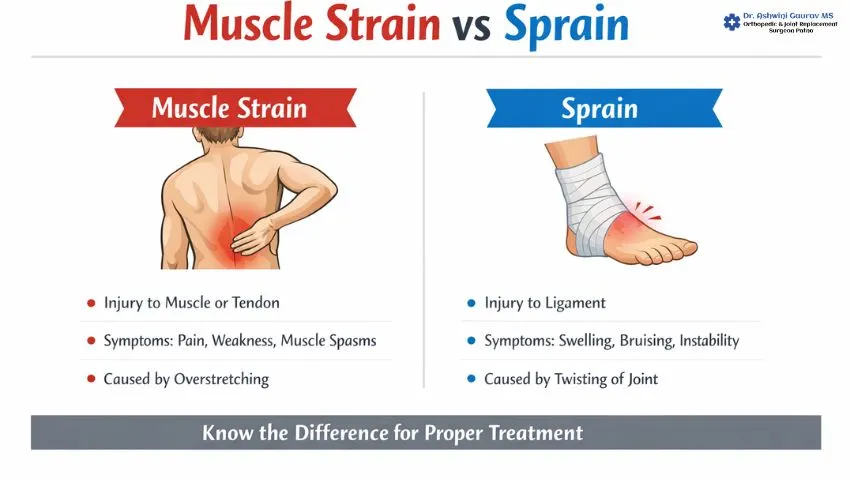
A muscle strain (often called a pulled muscle) occurs when a muscle or the tendon (the cord that attaches muscle to bone) is overstretched or torn. While a muscle strain vs sprain might feel similar, a strain is specifically an injury to the muscular system.
Common areas for a muscle strain and tear include:
- The lower back
- The hamstrings (back of the thigh)
- The neck or shoulders
What is a Sprain?
If a strain is about muscles, what is a sprain? A sprain is an injury to a ligament. Ligaments are tough, fibrous tissues that connect two bones together in your joints. They act like strong ropes that keep your skeleton stable.
A ligament sprain meaning involves the stretching or tearing of these “ropes.” This usually happens when a joint is twisted forcefully out of its normal range of motion. The most common site for this is the ankle.
The Difference Between Sprained and Strained: 10 Major Differences
Understanding the difference between sprain and strain can be confusing because both cause pain. Here is a simple breakdown of the sprain and strain difference:
Symptoms of Muscle Strain and Sprain
It is often hard to tell the difference between sprain and strain injury just by looking, but the sprain signs and symptoms usually differ slightly from muscle strain symptoms.
Muscle Strain Symptoms:
- Muscle spasms: The muscle might feel like it is jumping or tightening uncontrollably.
- Pain at rest: Strained muscles often hurt even when you aren’t moving.
- Weakness: You may find it hard to lift things or move the limb.
Redness or bruising: Sometimes visible if the tear is deep.
Symptoms of Sprain:
- Bruising: This is very common in sprains as blood vessels in the ligament tear.
- Joint instability: Feeling like your ankle or knee will “buckle.”
- Swelling: The joint may look puffy or “blown up.”
- Limited range of motion: You cannot move the joint fully.
Causes and Risk Factors
Why do muscle strains and sprains happen? The causes of muscle strain and sprain causes often overlap, but the mechanics are different.
Common Causes:
- Sudden Trauma: Falling on an outstretched hand causes a wrist sprain.
- Overuse: Repetitive motions in sports or work can lead to a chronic strain.
- Poor Warm-up: Cold muscles are less flexible and more prone to tearing.
- Fatigue: When your muscles are tired, they cannot support your joints properly.
How to treat sprains and strains
When you visit a bone specialist like Dr. Ashwini Gaurav, the diagnosis starts with a physical exam. The doctor will check for swelling, tenderness, and your ability to move the affected area.
To understand the difference between sprained and strained severity, doctors use sprain types or grades:
- Grade 1 (Mild): Slight stretching of fibers.
- Grade 2 (Moderate): Partial tearing of the ligament or muscle.
- Grade 3 (Severe): A complete rupture or tear, which might require surgery.
In some cases, an X-ray is done to rule out a broken bone, or an MRI is used to see the extent of the ligament sprain meaning or muscle tear.
Treatment Options for Strain vs Sprain
Knowing how to treat sprains and strains starts with the famous P.R.I.C.E. method. Whether it is muscle strain treatment or sprain treatment, the initial steps are identical.
- Protection: Protect the injured area from further harm. Use a brace, splint, or crutches if necessary.
- Rest: Avoid activities that cause pain. Your body needs energy to repair the damaged tissues.
- Ice: Apply ice packs for 15-20 minutes every 2-3 hours during the first 48 hours. This reduces swelling and numbs the pain.
- Compression: Wrap the area with an elastic bandage (like a Crepe bandage). This helps prevent fluid buildup.
- Elevation: Keep the injured area (like a sprained ankle) raised above the level of your heart to drain excess fluid.
Recovery Time and Healing Process
The time it takes to heal depends on the severity.
- Mild injuries: Usually feel better in 1-2 weeks.
- Moderate injuries: May take 4-6 weeks of dedicated physiotherapy.
- Severe (Grade 3): May take several months, especially if surgery is involved.
Dr. Ashwini Gaurav emphasizes that returning to sports too early is the #1 cause of re-injury. You must wait until the pain is gone and strength has returned.
Prevention Tips to Avoid Injury
Prevention is always better than a long recovery process. Follow these tips to keep your muscle strains and sprains at bay:
- Warm-Up: Spend 10 minutes doing light cardio and dynamic stretches before any workout.
- Wear Proper Shoes: Ensure your footwear provides good arch support and ankle stability.
- Strengthen Muscles: Strong muscles protect your joints from sprains.
- Hydration: Dehydrated muscles are more likely to cramp and strain.
- Listen to Your Body: If you feel “niggling” pain, stop. Don’t push through it.
When to See a Doctor for Strain or Sprain
While minor strains and sprains meaning can be managed at home, you should seek professional help from a Musculoskeletal Injury specialist like Dr. Ashwini Gaurav if:
- You heard a loud “pop” at the time of injury.
- You cannot walk more than four steps without severe pain.
- The joint feels completely unstable or “wobbly.”
- There is numbness or tingling in the injured area.
- The swelling does not go down after 48 hours of home care.
Conclusion
Understanding what is a muscle strain and what is a sprain is the first step toward a healthy recovery. While both involve overstretching of tissues, one affects your “movers” (muscles) and the other affects your “stabilizers” (ligaments).
By following the P.R.I.C.E. method and focusing on proper prevention, most people can get back to their daily routine quickly. However, for serious injuries, never hesitate to consult an expert
➜ Book Your Appointment with Dr. Ashwini Gaurav
➜ Best Orthopedic Doctor in Patna, Specialist in Joint, Muscle, and Ligament Injuries
➜ Call Now: 7070828777 / 9386737895
➜ Visit Jeevandan Health Hospital in Patna, Bihar
