

- 15/05/2021
- Dr. Ashwini Gaurav
- 0 Comments
- Uncategorized, Joint Pain
Swelling vs Oedema
Swelling vs Oedema: Overview
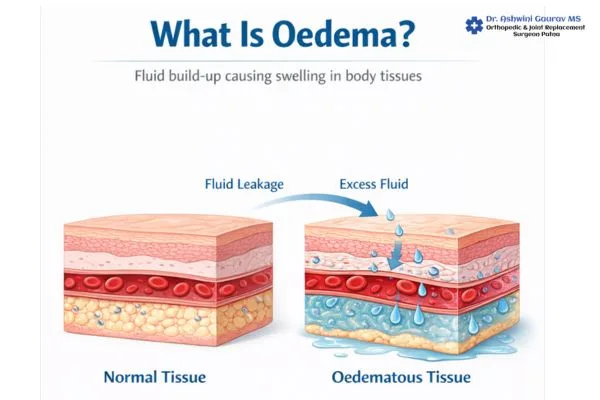
If you have ever woken up with puffy eyes or noticed that your shoes feel tight after a long day, you have experienced fluid buildup. While people often use the terms swelling vs oedema (edema) interchangeably, there are subtle differences you should know. Swelling is a general term used when any part of your body gets larger than normal, often due to injury or inflammation. However, oedema (or edema) is a specific medical term for swelling caused by excess fluid trapped in your body’s tissues. Whether you are dealing with a sports injury or a chronic condition, understanding the edema meaning and why your body is reacting this way is the first step toward recovery.
As the best bone specialist in Patna, Bihar, practicing at Jeevandan Health OPD, Dr. Ashwini Gaurav sees patients daily who struggle with these symptoms. With over 15 years of experience and as a Life Member of both the Indian and Bihar Orthopaedic Associations, Dr. Ashwini Gaurav wants to help you understand these conditions in simple language. If you are in Patna and facing persistent issues like body swelling or water retention, visiting Dr. Ashwini Gaurav at Jeevandan Health OPD can help you get a clear diagnosis and the right treatment plan to get you back on your feet.
What Is Swelling?
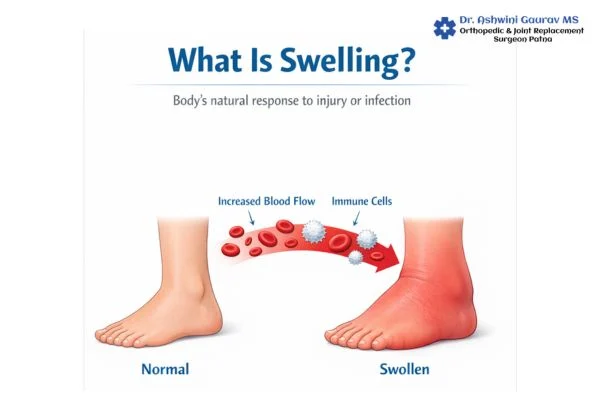
Swelling is the body’s natural response to “trouble.” It is often part of the inflammatory process. When you get injured or have an infection, your body sends extra blood and white blood cells to that area to help it heal. This extra activity causes the area to puff up.
Think of it like a crowded room; when too many “repair workers” (cells) arrive at once, the room (your body part) expands. Swelling can happen anywhere—your skin, muscles, or even internal organs.
What Is Oedema? (edema)
Swelling is the body’s natural response to “trouble.” It is often part of the inflammatory process. When you get injured or have an infection, your body sends extra blood and white blood cells to that area to help it heal. This extra activity causes the area to puff up.
Think of it like a crowded room; when too many “repair workers” (cells) arrive at once, the room (your body part) expands. Swelling can happen anywhere—your skin, muscles, or even internal organs.
Key Differences Between Swelling and Oedema
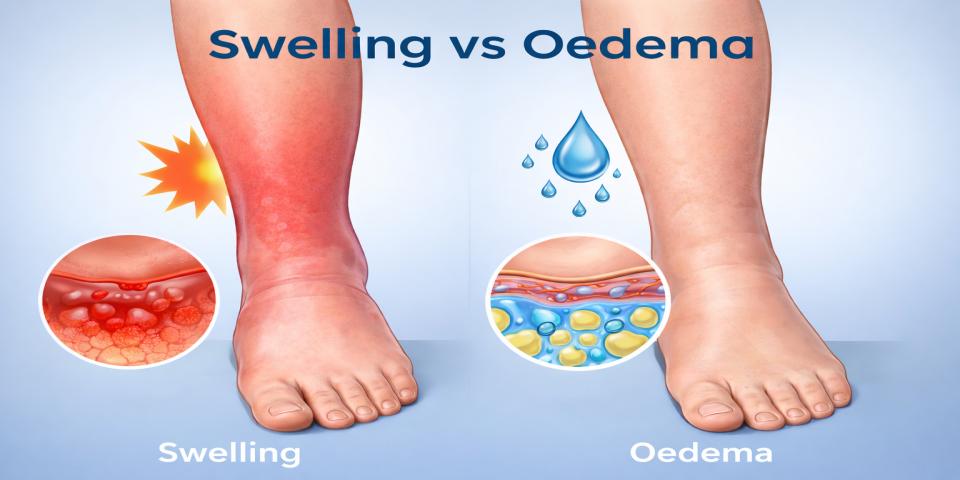
When we look at swelling vs oedema, the first major difference is the primary cause. Swelling is usually your body’s natural reaction to an injury, an infection, or inflammation—like when you bump your knee and it gets big. On the other hand, oedema (or edema) is specifically about fluid leakage from your small blood vessels into the nearby tissues, often due to an internal balance issue or a medical condition.
You can also tell them apart by these specific features:
- How it Feels: Swelling from a recent injury often feels firm, warm to the touch, or painful. Oedema usually feels “boggy,” soft, or spongy when you touch it.
- Location in the Body: Swelling is typically “localized,” meaning it stays in one specific spot like a bruised elbow or a bee sting. Oedema can be localized, but it is much more likely to affect larger parts of the body, such as both legs, or even the whole body at once.
- The Duration (Nature): Regular swelling usually goes away once the injury or infection heals. However, oedema may persist for a long time or keep coming back because it is often linked to underlying issues with the heart, liver, or kidneys.
In summary, while both conditions result in an enlargement of a body part, swelling is the broader category often linked to “repair work” after an injury. Oedema is a more specific medical term for “water retention” where fluid gets trapped in your tissues. Identifying which one you have with the help of Dr. Ashwini Gaurav is the first step toward getting the right treatment.
Causes of Swelling and Oedema
Understanding edema causes is essential because the treatment depends on the “why.”
- Gravity: Standing or sitting in one position for too long causes fluid to pull down into your legs (known as pedal edema).
- Injuries: A sprained ankle or a fractured bone will cause immediate ankle edema.
- Medical Conditions: Problems with the heart, kidneys, or liver can lead to severe body swelling.
- Medications: Certain high blood pressure drugs or steroids can cause water retention.
- Salt Intake: Eating too much salt makes your body hold onto extra water.
- Heat: On hot days, your blood vessels dilate, leading to heat edema.
Types of Oedema and Classification
Doctors like Dr. Ashwini Gaurav use an edema classification system to understand the severity of the condition.
- Acute Edema: This happens suddenly, usually due to a minor injury or an allergic reaction.
- Chronic Edema: This lasts for a long time (more than 3 months) and is often linked to underlying health issues like vein problems.
- Peripheral Edema: This affects the arms, legs, and feet.
- Pulmonary Edema: A serious condition where fluid collects in the lungs.
- Cerebral Edema: Fluid buildup in the brain (this is a medical emergency).
Pitting and Non-pitting Oedema
When you visit a doctor for edema grading, they will likely perform a “press test” on the swollen area.
- Pitting Edema: If the doctor presses their finger into the swollen skin and a “pit” or indentation remains for a few seconds after they let go, it is called pitting edema. This is common in heart or kidney issues.
- Non-pitting Oedema: If the skin bounces back immediately and no mark is left, it is non pitting edema. This is often seen in conditions involving the lymphatic system (Lymphedema) or thyroid issues.
Signs and Symptoms of Oedema
Common edema sign and symptoms include:
- Skin that looks stretched or shiny.
- An increase in the size of the affected limb.
- Feeling of “heaviness” in the legs or arms.
- Reduced flexibility in joints (like difficulty bending the ankle).
- Skin that retains a dimple after being pressed.
Leg, Foot, and Ankle Swelling
Swelling of legs and feet is one of the most common complaints Dr. Ashwini Gaurav hears at Jeevandan Health OPD. This is often called lower extremity edema.
- Foot edema and ankle edema are frequently caused by long hours of travel or standing.
- Leg edema (specifically swelling in legs) might be a sign of “Venous Insufficiency,” where the veins have trouble pumping blood back up to the heart.
- Hand swelling and face swelling are less common but can indicate allergies or hormonal changes.
Oedema in Pregnancy and Old Age
► Edema in Pregnancy
It is very common to experience pregnancy edema. As the baby grows, it puts pressure on the pelvic veins, slowing down blood flow. While mild swelling in feet is normal during pregnancy, sudden swelling in the face or hands should be checked by a doctor immediately.
► Oedema in Old Age
As we age, our heart and valves in the veins weaken. This often leads to chronic swelling of legs. Older adults are also more likely to be on medications that cause fluid retention.
Is Swelling of the Legs Dangerous?
Most of the time, swelling in feet or legs is just an inconvenience. However, it can be dangerous if:
- It happens suddenly in only one leg (could be a blood clot/DVT).
- It is accompanied by chest pain or shortness of breath.
- The swollen area is red, hot, and painful (sign of infection).
If you notice these “red flags,” you should seek help from an orthopaedic specialist like Dr. Ashwini Gaurav immediately.
Diagnosis and Examination of Oedema
To find the cause, a doctor will:
- Check Medical History: They will ask about your diet and medications.
- Physical Exam: They will look for pitting or non-pitting signs.
- Blood Tests: To check kidney and liver function.
- Imaging: X-rays or Ultrasounds (Doppler) to check for bone injuries or blood clots.
Treatment for Swelling and Oedema
The edema treatment plan depends on the diagnosis.
- For Injuries: We use the R.I.C.E. method (Rest, Ice, Compression, Elevation).
- For Medical Issues: Doctors may prescribe “water pills” (diuretics) to help the body flush out extra salt and water.
- Treatment for edema of legs: Wearing compression stockings can help keep fluid from pooling in the lower limbs.
- Dietary Changes: Reducing salt (sodium) intake is often the first step in managing water retention.
How to Reduce Swelling and Prevent Oedema
You can take simple steps at home to manage body swelling:
- Elevate Your Legs: Keep your feet above the level of your heart for 30 minutes, three times a day.
- Move Around: If you have a desk job, stand up and walk every hour to prevent leg swelling causes like poor circulation.
- Reduce Salt: Avoid processed foods and pickles, which are high in salt.
- Stay Hydrated: Ironically, drinking more water can sometimes help flush out the excess salt causing the retention.
- Exercise: Simple ankle pumps or walking helps the calf muscles pump fluid back up.
Conclusion
Understanding the difference between swelling vs oedema helps you know when to rest and when to see a doctor. While a little puffiness after a long flight is normal, persistent lower extremity edema should never be ignored. If you are struggling with swelling in legs, joint pain, or any bone-related issues in Patna, Dr. Ashwini Gaurav is here to help. At Jeevandan Health OPD, we combine 15 years of expertise with a patient-first approach to get you back on your feet.
Don’t let swelling slow you down. Take care of your health today!
Book an Appointment Now
FAQs: About Swelling vs Oedema
There are several edema causes, ranging from lifestyle habits to medical conditions. Common factors include standing or sitting for too long, eating high-salt foods, and hormonal changes during pregnancy. In some cases, Dr. Ashwini Gaurav notes that it can be a sign of underlying heart, kidney, or liver issues. Certain medications and heat can also trigger water retention in the tissues.
To learn how to reduce swelling in legs, you should follow the R.I.C.E. method—Rest, Ice, Compression, and Elevation. Elevating your legs above heart level for 20–30 minutes helps fluid drain away. Dr. Ashwini Gaurav also recommends wearing compression stockings and staying active to improve blood circulation in the lower extremities.
If you want to know how to get rid of water retention in the legs, the best way is to reduce your daily salt intake and drink plenty of water to flush out excess sodium. Regular movement, such as walking or ankle pumps, prevents fluid from pooling. Dr. Ashwini Gaurav advises avoiding processed foods and increasing potassium-rich foods like bananas to help balance fluid levels.
To how to cure swelling on feet caused by a sprain or strain, apply an ice pack for 15 minutes every few hours during the first 48 hours. Avoid putting weight on the affected foot. If the swelling is accompanied by severe pain or a change in bone shape, you should consult an expert like Dr. Ashwini Gaurav at Jeevandan Health OPD to rule out a fracture.
The best approach for how to treat edema depends on the root cause. While home remedies like elevation and salt reduction work for mild cases, medical edema treatment may involve diuretics (water pills) prescribed by a doctor. Dr. Ashwini Gaurav emphasizes that treating the underlying condition—such as fixing a bone injury or managing blood pressure—is the most effective way to clear the fluid long-term.
एडिमा का सरल अर्थ है शरीर के अंगों में असामान्य रूप से तरल पदार्थ (Fluid) का जमा होना। जब शरीर के ऊतकों (tissues) में फालतू पानी इकट्ठा हो जाता है, तो उसे मेडिकल भाषा में एडिमा कहते हैं।
मुख्य बातें:
- पानी का जमाव: यह अक्सर पैरों, टखनों और हाथों में सूजन के रूप में दिखता है।
- दबाने पर निशान: एडिमा वाली जगह को उंगली से दबाने पर वहां कुछ सेकंड के लिए गड्ढा बन सकता है।
- कारण: ज्यादा नमक खाना, घंटों तक एक जगह बैठे रहना, या किडनी और दिल से जुड़ी समस्या इसके मुख्य कारण हो सकते हैं।
- बचाव: नमक कम खाएं, पैरों को ऊंचाई पर रखें और नियमित पैदल चलें।
सामान्य सूजन चोट से होती है, लेकिन एडिमा शरीर के अंदरूनी असंतुलन या Water Retention के कारण होता है।
