

- 20/11/2026
- Dr. Ashwini Gaurav
- 0 Comments
- Joint Replacement
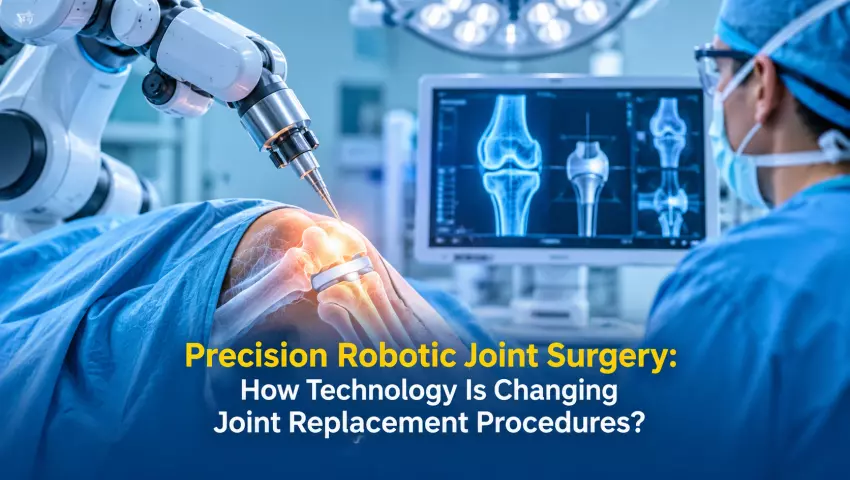
Precision Robotic Joint Surgery: How Technology Is Changing Joint Replacement Procedures?
Joint pain can slowly take away your freedom. Many people delay surgery because they fear the operation or the long recovery. Today, precision robotic joint surgery is making joint replacement more accurate and more personalised than before.
This blog is guided by Dr Ashwini Gaurav, Best Orthopedic Doctor in Patna and Best Robotic Knee Replacement Surgeon in Patna, Director and Head of Orthopaedic & Joint Replacement Surgery. His speciality is robotic knee replacement surgery at Jeevandan Health OPD. Here we explain how robotic surgery works, its benefits, limits, cost, recovery and how to choose a surgeon.
What Is Precision Robotic Joint Surgery?
Robotic joint replacement surgery is a modern way of replacing a damaged joint with an artificial implant, using a robotic system to guide the surgeon. It is mainly used for knee and hip replacement.
The most important thing to know is that the robot does not operate on its own. The word “robotic-assisted” means the surgeon stays in full control from start to finish. The robot only helps with planning and accuracy.
Simple difference between the three methods:
- Manual surgery: The surgeon uses hand instruments and experience to make bone cuts.
- Navigation-assisted surgery: A computer shows the position of the bone and instruments on a screen.
- Robotic-assisted surgery: A 3D plan and a robotic arm help the surgeon keep the bone cuts within planned limits.
How Technology Is Changing Joint Replacement Procedures?
Joint replacement was once a one-size-fits-all operation. Now it is becoming personalised. Here are the main technologies:
- Robotic-assisted systems: Help the surgeon follow a detailed plan with high accuracy.
- 3D CT-based planning: A scan creates a 3D model of your joint before surgery.
- Computer navigation: Works like a “GPS” for the surgeon, tracking the position of the bone and instruments.
- AI-supported planning: Software studies scans and data to suggest implant size and position.
- Patient-specific implants and guides (3D printing): Custom guides can be made to match a patient’s anatomy.
- Minimally invasive techniques: Smaller incisions can mean less muscle damage and less blood loss.
- Wearable sensors and app-based tracking: Help doctors and physiotherapists follow your walking and exercise progress after surgery.
Not every hospital uses all of these. Your surgeon will choose what is useful for your case.
How Robotic Joint Replacement Works (Step by Step)?
- Scan and 3D model: A CT scan or X-ray is used to create a 3D picture of your knee or hip.
- Personalised plan: The surgeon decides the implant size, position and angle that suit your joint.
- Real-time tracking: During surgery, the system tracks your leg and gives live feedback.
- Controlled bone cuts and implant placement: The robotic arm helps the surgeon remove only the damaged bone, and the implant is fixed.
- Final balance and alignment check: The surgeon checks that the joint moves smoothly and is well balanced before closing.
Benefits of Robotic Joint Surgery:
- Accurate implant position and alignment: A well-aligned joint shares body weight evenly and feels more comfortable.
- Less damage to healthy bone and soft tissue: Better planning helps protect the tissue around the joint.
- Less blood loss and early-stage pain: Many patients feel less pain in the first few days, though this differs from person to person.
- Better joint balance and natural movement: Ligament balance can be checked during surgery.
- Shorter hospital stay and faster rehabilitation for many patients: Walking and physiotherapy can start early.
- Possible longer implant life: Accurate alignment may reduce uneven wear, but long-term studies are still going on, so no doctor can promise a fixed number of years.
Limitations and Things to Know:
Every treatment has limits, and a good doctor will explain them honestly:
- Higher cost: Robotic surgery usually costs more than conventional surgery.
- Setup can add operating time: Planning and setup may make the procedure a little longer in some cases.
- Surgeon’s experience still matters: The robot is a tool. Results depend mainly on the surgeon’s skill.
- Limited availability in smaller cities: Fewer hospitals and trained surgeons offer it.
- Long-term advantage is still being studied: Early results are good, but the benefit over conventional surgery is not proven to be very large for every patient.
- General surgical risks: Infection, blood clots and stiffness can happen with any joint replacement. Your surgeon will explain how these risks are reduced.
Robotic vs Conventional Joint Replacement:
| Factor | Robotic-assisted | Conventional |
|---|
Results differ from patient to patient.
Robotic Knee Replacement vs Robotic Hip Replacement:
- Robotic knee replacement: The knee is a hinge-like joint with many ligaments, so balance and alignment are very important. Robotic assisted knee joint replacement surgery helps the surgeon plan these details carefully. It is often useful for patients with bow legs, knock knees or severe arthritis. The best robotic knee replacement surgery in Patna is one done by an experienced surgeon who plans each knee individually.
- Robotic hip replacement: The hip is a ball-and-socket joint. Precision helps in placing the cup and the stem at the right angle and keeping both legs equal in length, which improves comfort and stability.
- Differences in recovery: Both usually need a few days in the hospital and regular physiotherapy. Knee patients often need more exercises to regain bending, while hip patients follow some movement precautions for a few weeks.
Who Is a Good Candidate?
You may be a good candidate for robotic joint replacement if you have:
- Severe arthritis with pain at rest or at night
- Difficulty walking, standing or climbing stairs
- Visible deformity of the knee or leg
- No relief from medicines, injections or physiotherapy
- A younger or active lifestyle and you want a well-aligned joint
It may not be suitable if you have an active infection or uncontrolled medical problems such as severe heart or lung disease. Dr Ashwini Gaurav examines each patient, checks the reports and then advises whether robotic or conventional surgery is the better choice.
Cost of Robotic Joint Replacement:
Many patients search for robotic-assisted joint replacement cost before deciding. The cost is not the same for everyone and depends on:
- Type and brand of implant
- Hospital and room category
- Surgeon’s experience
- Tests, medicines and physiotherapy
- One joint or both joints
Many health insurance plans cover joint replacement surgery, and some patients may be eligible under Ayushman Bharat, depending on the hospital and scheme rules. EMI options are also available at many hospitals.
Tip: Always ask for a written package estimate that clearly shows what is included. For an exact estimate, you can consult Dr Ashwini Gaurav at Jeevandan Health OPD.
Recovery and Rehabilitation:
Joint replacement recovery time depends on your age, health and how well you follow physiotherapy.
- Hospital stay and first steps: Most patients are helped to stand and walk with support within a day or two, as advised by the doctor.
- Weeks 1 to 6: Daily physiotherapy improves walking and movement. Swelling slowly settles.
- 3 to 6 months: Most patients return to normal life with much less pain.
Home care tips:
- Do your physiotherapy exercises daily
- Keep floors dry and remove loose mats
- Use a western-style toilet seat for the first few weeks
- Take medicines on time and go for follow-up visits
- Call your doctor if you notice fever, redness or severe pain
How to Choose the Right Surgeon and Hospital?
Technology is useful only in the right hands. If you are looking for the best robotic joint replacement surgeon in Patna, check these points:
- Experience: How many robotic joint replacements has the surgeon performed?
- System and training: Which robotic system is used, and is the team trained to use it?
- Physiotherapy and follow-up: Good rehabilitation is part of good results.
- Transparent pricing and patient reviews: Look for clear costs and honest feedback.
At Jeevandan Health OPD, Dr Ashwini Gaurav focuses on careful planning, clear communication and complete follow-up care, so patients feel confident at every step.
Frequently Asked Questions:
Robotic surgery offers greater precision and can reduce the risk of implant misalignment. But safety also depends on the surgeon’s experience and your health.
Yes, it usually costs more because of the advanced technology. Ask for a written estimate so you know what is included.
Most patients walk with support in a day or two and return to routine activities in about 6 weeks to 3 months. Full recovery can take up to 6 months.
The implants are generally similar. The difference is in how accurately they are planned and positioned.
Most patients with severe arthritis can be considered, but a full check-up is needed to decide the best option for you.
Modern implants often last 15 to 20 years or more with good care. Whether robotics adds more life is still being studied.
Look for an experienced surgeon, proper technology, good physiotherapy support and clear pricing.
Conclusion:
Technology is making joint replacement more precise, more personalised and, for many patients, easier to recover from. Still, the robot is only a tool. The surgeon’s skill and experience matter just as much, and the right plan depends on your joint, your health and your goals.
If joint pain is stopping you from living freely, do not wait for it to get worse. Get an expert opinion and understand your options.
Book Your Consultation Today:
Visit Dr Ashwini Gaurav, Best Orthopedic Doctor in Patna, at Jeevandan Health OPD to know if robotic joint replacement surgery is right for you.
📞 Call us to book your appointment.
Disclaimer: This blog is for general information only and is not a substitute for medical advice. Please consult a qualified orthopaedic surgeon for diagnosis and treatment.