


- 09/01/2026
- Dr. Ashwini Gaurav
- 0 Comments
- Blog
Knock Knee Syndrome: Causes, Symptoms, and Knee Knock Treatment
Have you ever noticed your knees knock against each other while your ankles stay far apart? Medically known as Genu Valgum, knock knees disease is often a natural part of a child’s growth. However, if the gap remains wide as they get older, it can lead to serious knock knees problems such as chronic joint pain, difficulty walking, and a higher risk of a knock injury due to the abnormal stress on the joint.
Because so many people search for “knock knees how to correct,” it is important to understand that there is no “one-size-fits-all” answer. The best knock knees how to correct strategy depends on age: for children, it often involves nutritional support or “Guided Growth” surgery; for adults, it may require specialized braces, targeted strengthening exercises, or a corrective procedure called an Osteotomy to realign the bone.
If you are looking for a permanent knock knees solution, consulting an expert is vital. Dr. Ashwini Gaurav, the Best Orthopedic Doctor in Patna and Director at Jeevandan Health OPD, specializes in correcting these bone deformities using advanced care to ensure you can walk pain-free and with total confidence.
What is Knock-Knee Syndrome?
Knock Knee Syndrome (Genu Valgum) is a condition where the knees tilt inward and touch each other when standing, while the ankles remain apart. Common causes of knock knees include vitamin deficiencies (like Rickets), bone infections, or genetic factors.
Treatment ranges from knock knee correction exercise and braces for mild cases to knock knee surgery for severe structural issues in adults.
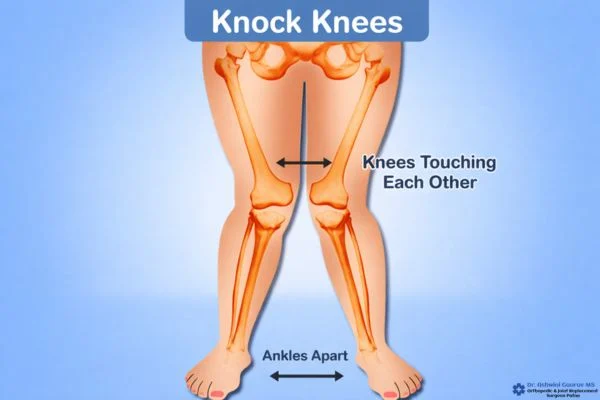
Causes and Reasons: Why Knock Knee Syndrome Is Caused By Certain Factors
Understanding the reason for knock knees is the first step toward treatment. It isn’t just about “walking wrong”; it often relates to how bones develop.
Here are the primary reasons why Knock Knee syndrome develops:
- Nutritional Deficiencies (Rickets): Especially in India, a deficiency in Vitamin D, Calcium, and Phosphate can soften growing bones. This makes them unable to support the child’s weight, causing the legs to bow inward.
- Obesity: Excess body weight puts significant, sustained pressure on the knee joints. Over time, this stress causes the knees to tilt inward to accommodate the weight, which is a major factor in both children and adults.
- Childhood Injury or Infection: If there is trauma or an infection affecting the growth plates (the areas at the ends of the bones) during childhood, it can disrupt normal bone development, leading to misalignment.
- Genetic Factors: Some individuals are born with a genetic predisposition or connective tissue disorders (like Ehlers-Danlos syndrome) that make their joints more flexible or prone to misalignment.
- Osteoarthritis (in Adults): If childhood knock knees were never treated, or if the knee joint has undergone significant “wear and tear,” the cartilage wears down unevenly. This often leads to adult-onset knock knee deformity and chronic pain.
- Bone Tumors or Growth Disorders: In rare instances, conditions like Blount’s disease (a disorder of the shin bone) or benign bone tumors can interfere with healthy leg alignment.
Symptoms of Knock Knee Syndrome:
How do you identify problems with knock knees? Look for these signs:
- A visible gap between ankles when knees are touching
- An unusual “clumsy” walking style or a limp.
- Pain in the knees, hips, or ankles due to uneven weight distribution.
- Difficulty running or participating in sports.
- Outwardly rotated feet.
Diagnosis of Knock Injury by Dr. Ashwini Gaurav:
Before starting any knock knee treatment exercise, a professional diagnosis is necessary. Dr. Ashwini Gaurav uses a detailed approach:
- Physical Examination: Measuring the distance between the ankles and observing the gait (walking style).
- Knock Knees Test: Checking for ligament stability and joint range of motion.
- Knock Knee X-ray: A full-length knock knees x ray (standing) is the gold standard. It helps the doctor see the exact angle of the femur and tibia.
- Knock Knees Photos: Comparing a patient’s knock knees pics over time to monitor the progression of the deformity.
Knee Knock Treatment Options:
Depending on the age of the patient and the severity shown in the knock knee pic, Dr. Gaurav suggests the following:
Non-Surgical Treatments:
- Observation: Many kids outgrow it naturally by age 7 or 8.
- Knock Knees Belt & Braces: A knock knees corrector or specialized night braces can help realign the legs in growing children.
- Shoes for Knock Knees: Using orthotic inserts or specific knock knees shoes can help redistribute weight and reduce pain.
- Knock Knee Yoga: Practicing specific poses like Vrikshasana (Tree Pose) can improve balance.
Knock Knee Treatment for Children
In most cases, knock knees (Genu Valgum) are a normal part of a child’s growth. Many children show signs between the ages of 3 and 6, and the legs usually straighten naturally by age 7 or 8. However, if the gap between the ankles remains wide, the following treatments are recommended:
- Observation: If the condition is age-appropriate, doctors suggest “watchful waiting” to see if the legs straighten on their own as the child grows.
- Nutritional Support: If the cause is Vitamin D or Calcium deficiency (Rickets), specialists prescribe supplements to strengthen the bones and correct the alignment.
- Physical Therapy: Specialized exercises help strengthen the muscles around the knee and hip, improving the child’s walking pattern (gait).
- Guided Growth Surgery: For severe cases where the child is still growing, a minimally invasive procedure is used. Small metal plates are placed near the growth plate to “guide” the bone to grow straight. These plates are removed once the correction is complete.
Knock Knee Treatment for Adults
Unlike children, knock knees in adults do not self-correct because the growth plates have closed. Treatment focuses on managing pain and preventing long-term joint damage like Osteoarthritis:
- Weight Management: Reducing body weight is crucial as it decreases the stress and pressure on the inner knee joint.
- Orthotics (Shoe Inserts): Custom-made heel wedges or insoles can help redistribute the pressure on the knees while walking.
- Muscle Strengthening: Targeted workouts for the quadriceps and hip abductors help stabilize the knee joint and reduce discomfort.
- Osteotomy Surgery: In cases of severe deformity or persistent pain, a surgery called Osteotomy is performed. The surgeon reshapes the thigh or shin bone to realign the limb and shift the body weight away from the damaged part of the knee.
Best 10 Knock knees Exercises
Knock knees (Genu Valgum) can cause pain and uneven wear on your joints. By performing targeted knock knees exercises, you can strengthen your hips and glutes to pull your knees back into proper alignment.
Here are 10 of the best exercises for knock knees to help improve your posture and leg strength:
- Side-Lying Leg Raises: Lie on your side and lift your top leg straight up. This is a vital knock knee correction exercise for hip strength.
- Clamshells: Lie on your side with bent knees. Open your top knee like a shell while keeping your feet together.
- Sumo Squats: Stand with a wide stance and toes pointed out. This is a top knock knee exercise for adults to keep knees from caving in.
- Wall Squats: Lean against a wall and lower into a sitting position. This builds stability without overstraining the joint.
- Side Lunges: Step out to the side and bend one knee. This strengthens the outer hips and improves knock knee treatment exercise results.
- Crab Walks: Place a resistance band around your knees and walk sideways. This is one of the most effective knock knees exercises for adults.
- Single-Leg Glute Bridge: Lie on your back, lift your hips, and extend one leg. Strong glutes prevent knees from leaning inward.
- Step-Ups: Step onto a platform while focusing on keeping your knee straight and stable.
- Straight Leg Raises: Lie on your back and lift one leg straight up. This is often used in total knee joint replacement exercises to build quad strength.
- Butterfly Stretch: Sit with soles together to improve inner thigh flexibility, which supports better alignment.
Why Exercise Matters
Consistency is the key to any knock knee treatment exercise plan. These movements are also beneficial for those looking into knee replacement and exercise, as they protect the joint from further damage.
Surgical Options for Severe Knock Knees:
For knock knee adults or teenagers whose growth plates have closed, surgery is often the only permanent knock knees solution.
- Guided Growth (Hemi-epiphysiodesis): A small metal plate is placed on one side of the growth plate to “guide” the leg to grow straight.
- Osteotomy: This is a more complex knock knee surgery where the bone is cut and reshaped to fix the alignment. Dr. Ashwini Gaurav is an expert in performing these precision surgeries in Patna.
Knock Knees vs Normal Knees:
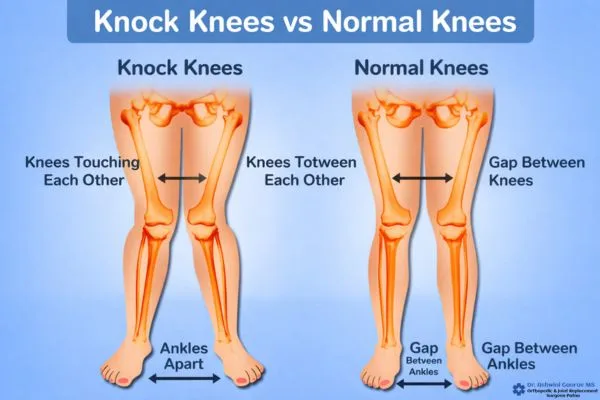
Knock Knees vs Normal Knees: Key Differences
1. Alignment & Weight Distribution: In normal knees, your body weight passes through the center of the joint. In knock-kneed disease, the weight shifts to the outer side. This “off-center” pressure causes the cartilage to wear out faster, leading to pain and early-onset arthritis.
2. Age & Correction: It is common for children (ages 2–7) to have knees knock as they grow, which often self-corrects. However, in adults, the condition is usually permanent and requires professional knee knock treatment—such as specialized exercises, braces, or surgery—to realign the joint and prevent long-term damage.
Why Choose Dr. Ashwini Gaurav for Knee Knock Treatment?
When you look at knock knee images or knock knees pics on the internet, it can be scary. However, with the right expert, the condition is highly treatable.
Dr. Ashwini Gaurav provides:
- Advanced Diagnostics: High-quality knock knees x ray analysis.
- Expert Correction: From corrective exercise for knock knees plans to advanced knock knee surgery.
- Proven Results: 15+ years of helping patients stand tall and walk confidently.
Conclusion:
Knock knee syndrome is more than just a cosmetic issue; it affects your long-term joint health. Whether you are seeking a knock knee yoga routine for mild cases or exploring knock knee surgery for structural correction, early intervention is key to avoiding future pain.
Don’t let knock knees problems stop you from living an active life. Consult Dr. Ashwini Gaurav, the Best Orthopedic Doctor in Patna, for a personalized treatment plan. Contact OrthoPatna today to schedule your consultation with Dr. Ashwini Gaurav and take the first step toward straighter, healthier legs.
- Contact no – 7070828777 / 9386737895
- Visit Jeevandan Health OPD
FAQs About Knee Knock:
It is a condition, medically called Genu Valgum, where the knees tilt inward and touch each other while the ankles remain apart. If you are wondering what is knock kneed, it simply refers to this “X-shaped” leg alignment.
Knock knee means that the weight of your body is not distributed evenly across the knee joint. This can lead to knee pain, a clumsy walking style, and a higher risk of joint injuries or early arthritis.
Knock knee syndrome caused by nutritional deficiencies like Vitamin D or Calcium (Rickets), bone infections, or injuries to the growth plate. Interestingly, when people ask knock knee syndrome is caused by which pollution, it often refers to Fluoride pollution in water, which can weaken bones and lead to deformities.
To learn how to check knock knees, stand straight with your kneecaps facing forward. If your knees touch but there is a gap of more than 3 inches between your ankles, you likely have the condition.
Yes, knock knee (Genu Valgum) is fully curable. According to Dr. Ashwini Gaurav, the treatment approach depends on the patient’s age and severity. In children, it often resolves naturally or through braces and nutritional supplements. For adults, while exercises improve stability, permanent correction is achieved through advanced surgical procedures like Osteotomy.
For expert diagnosis and a permanent solution, visit Dr. Ashwini Gaurav at Jeevandan Health OPD, Patna. He specializes in both non-surgical and surgical realignments to restore knee health.
To know how to treat knock knees in kids, doctors usually suggest observation, Vitamin D supplements, or special knock knee shoes. Most children outgrow the condition naturally by age 7 or 8.
If you are looking for how to fix knock knees after growth has stopped, Dr. Ashwini Gaurav may recommend a specialized surgery called an osteotomy to realign the bones and prevent future joint damage.
Many ask, can knock knees be corrected in adults by exercise? While exercises cannot change the actual bone structure once you are an adult, they are excellent for strengthening muscles and reducing pain. For actual bone realignment in adults, surgery is usually required.
For mild cases, people ask how to correct knock knees without surgery. This involves knock knee correction exercises, weight loss to reduce pressure on joints, and using orthopedic shoe inserts.
The best way how to cure knock knees permanently is to address the root cause. If it is a vitamin deficiency, supplements help. If it is a structural bone issue, Dr. Ashwini Gaurav provides advanced surgical solutions at the best orthopedic clinic in Patna.
Knock knee syndrome is primarily caused by nutritional deficiencies, such as a lack of Vitamin D and Calcium (Rickets). Other common factors include bone infections, genetic conditions, or injuries to the growth plates during childhood. In some cases, obesity can worsen the condition by putting excessive pressure on the knee joints.
Dr. Ashwini Gaurav at Jeevandan Health OPD also highlights that environmental factors, such as high fluoride levels in water, can weaken bones and lead to this deformity. Early diagnosis is key to effective treatment.