

- 19/08/2026
- Dr. Ashwini Gaurav
- 0 Comments
- Blog
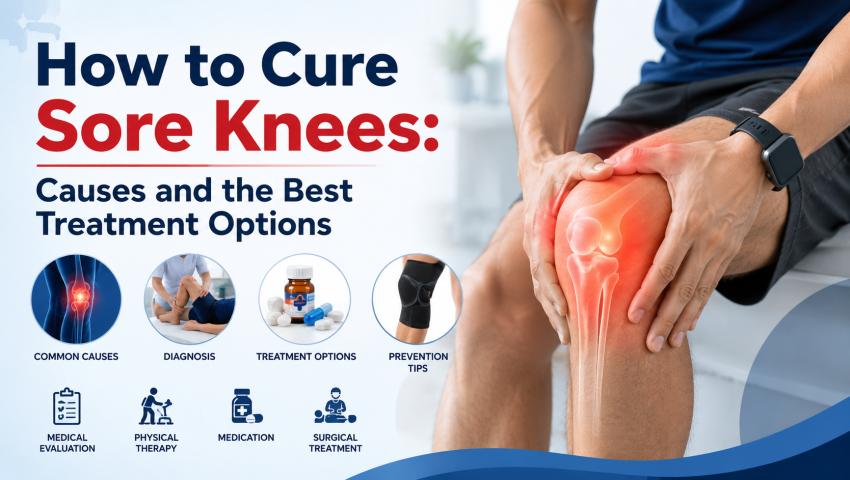
How to Cure Sore Knees: Causes and the Best Treatment Options
Sore knees are one of the most common problems people face today — whether you are a young athlete, a busy office-goer, a new mother, or someone in their golden years. Almost everyone experiences sore knees at some point in life, and the reasons can range from simple overuse to more serious joint issues.
This guide is here to help you understand how to cure sore knees, sore knees causes, simple home remedies, and — most importantly — when it is time to visit a doctor. According to Dr. Ashwini Gaurav, Best Orthopedic Doctor in Patna with 15+ years of experience, and Director and Head of Orthopaedic & Joint Replacement Surgery, most knee pain cases can be managed well with the right approach, but “curing” sore knees usually means long-term care and prevention, not just a one-time fix. Dr. Ashwini Gaurav, who also performs knee replacement surgery at Jeevandan Health OPD, believes that understanding the root cause is the first step towards lasting relief.
In this blog, we will cover everything from sore knees causes to how to cure sore knees at home, and when professional treatment becomes necessary.
15000+
15+
15+
100%
What Causes Sore Knees?
Understanding sore knees causes helps you choose the right treatment. Here are the most common reasons:
- Overuse and repetitive strain: Constant walking, standing, or repetitive movements can stress the knee joint.
- Joint-related causes: Problems in the sore knee joint such as arthritis (osteoarthritis or rheumatoid arthritis) are common, especially with age.
- Muscle-related causes: Tight or weak sore knee muscles around the knee — quadriceps, hamstrings, and calves — can pull on the joint and cause discomfort.
- Injury: Ligament tears (ACL, MCL) or meniscus damage from sports or accidents.
- Age-related wear and tear: Cartilage naturally thins with age, leading to soreness and stiffness.
Dr. Ashwini Gaurav notes that identifying whether the pain is coming from the joint or the muscles is important, as the treatment approach differs for each.
Sore Knees From Specific Activities:
- Sore knees from running / during running: The repeated impact of running can strain the knee, especially if your running form is incorrect or you increase your mileage too quickly.
- Sore knees after walking: Wrong footwear, walking on hard surfaces, or covering long distances suddenly can trigger pain.
- Sore knees after cycling: Poor bike fit or incorrect pedalling technique often causes knee strain.
- Sore knees after leg day: This is usually simple muscle soreness (called DOMS – Delayed Onset Muscle Soreness) rather than joint damage. Gentle stretching and sore knee muscle treatment like light massage and rest usually help within a couple of days.
Sore Knees and Hormonal/Life Stages:
Knee pain is not just about activity — hormones and life stages play a big role too.
- Sore knees pregnancy / sore joints during pregnancy: During pregnancy, the body releases a hormone called relaxin, which loosens ligaments to prepare for childbirth. Combined with extra body weight, this can lead to sore joints during pregnancy, especially in the knees.
- Sore knees postpartum / post pregnancy / sore knees breastfeeding: After delivery, hormonal shifts continue, and constantly carrying the baby adds extra load on the knees. Many new mothers report sore knees postpartum even while breastfeeding, mainly due to posture and fatigue.
- Sore knees before period / during period / sore knees period: Hormonal fluctuations before and during menstruation can increase joint sensitivity, making knees feel more sore than usual.
Dr. Ashwini Gaurav advises women going through these life stages to keep gentle movement, good posture, and adequate rest as priorities, rather than pushing through the pain.
When Sore Knees Strike? Timing Patterns
- Sore knees in the morning: Stiffness right after waking up can point towards early arthritis or inactivity overnight.
- Sore knees at night / sore knees when sleeping: This could be due to sleeping position, inflammation building up during the day, or an unsupportive mattress.
- Sore knees in winter: Cold weather can cause blood vessels around the joint to constrict, and lower temperatures may increase stiffness and sensitivity.
These patterns can give useful clues about the underlying cause, so it helps to note down when your knee pain feels worse.
Pain Location Matters: Treating Pain Behind the Knee
Pain behind the knee is a bit different from general soreness. It could be due to a Baker’s cyst (fluid build-up behind the knee) or tight hamstring tendons.
How to treat pain behind the knee: Gentle stretching of the hamstrings, avoiding prolonged sitting with bent knees, and applying ice can help. If swelling behind the knee doesn’t reduce in a few days, it’s best to get it examined.
How to Cure Sore Knees? Step-by-Step
Here is a simple step-by-step approach on how to cure sore knees:
- Immediate relief: Follow the RICE method — Rest, Ice, Compression, Elevation.
- Reduce inflammation: Use ice packs and include anti-inflammatory foods in your diet.
- Restore movement: Once the initial pain settles, start gentle mobility exercises to avoid stiffness.
- Rebuild strength: Focus on strengthening the muscles around the knee for better support.
- Address the root cause: Correct your footwear, training habits, posture, or body weight depending on what’s triggering the pain.
Dr. Ashwini Gaurav explains that “curing” sore knees is usually a gradual process — most people feel noticeable improvement within a few weeks of consistent care, though chronic joint issues may need ongoing management.
How to Cure Knee Pain at Home?
If you’re looking for how to cure knee pain at home, here are simple and effective steps:
- RICE method: Rest the knee, apply ice for 15-20 minutes, use a compression bandage, and keep the leg elevated.
- How to relieve pain in knees: Alternate between gentle movement and rest — complete inactivity can make stiffness worse.
- How to relieve knee pain exercises: Quad sets, straight leg raises, and gentle wall sits help strengthen the knee without added stress.
- Over-the-counter support: General pain relief options are available, but it’s best to check with a pharmacist or doctor before use.
- Sore knee muscle treatment: Foam rolling, light massage, and regular stretching can ease muscle tightness around the joint.
These simple methods on how to heal knee pain at home and how to relief knee pain at home work well for mild to moderate soreness.
How to Cure Knee Pain Quickly?
If you need fast relief, try:
- Applying ice for 15-20 minutes
- Using a compression bandage
- Elevating the leg above heart level
- Taking short-term rest from strenuous activity
While these steps offer how to cure knee pain quickly, remember that quick relief is different from long-term healing — don’t skip the deeper treatment steps once the initial pain settles.
How to Improve Sore Knees Long-Term?
For those wondering how to improve sore knees over time:
- Strength training: Build up the quadriceps, hamstrings, and glutes to support the knee joint better.
- Weight management: Every extra kilogram adds pressure on the knees, so maintaining a healthy weight matters a lot.
- Proper footwear: Supportive shoes reduce unnecessary strain during daily activities.
- Low-impact cardio: Swimming, cycling on a stationary bike, or walking on soft surfaces are gentler on the knees compared to running or jumping.
Nutrition and Sore Joints:
Diet plays a bigger role in joint health than many people realise. Sore joints vitamin deficiency — particularly low Vitamin D and Vitamin C — is linked to increased joint pain and weaker cartilage.
- Include foods rich in Vitamin D (sunlight exposure, fortified foods) and Vitamin C (citrus fruits, amla)
- Add anti-inflammatory foods like turmeric, ginger, nuts, and leafy greens to your meals
- Consider supplements only after consulting a doctor, as unsupervised use may not be safe for everyone
Prevention Tips:
Prevention is always better than cure, especially for joint health:
- Always warm up before and cool down after exercise
- Regularly strengthen the muscles supporting your knees
- Follow activity-specific care — proper running form, correct bike fit, gradual leg-day progression
- Avoid sudden increases in activity intensity or duration
When to See a Doctor?
While home care works for most mild cases, certain signs need immediate medical attention:
- Severe swelling or redness
- Inability to bear weight on the knee
- Visible deformity after an injury
- Persistent pain that doesn’t improve despite rest and home treatment
Dr. Ashwini Gaurav, who leads knee replacement surgery in patna at Jeevandan Health OPD, recommends not ignoring persistent knee pain, as early diagnosis often prevents the need for more invasive treatment later.
Conclusion:
Sore knees can happen due to many reasons — overuse, injury, hormonal changes, or simple wear and tear with age. The good news is that most cases respond well to home care, proper exercise, and lifestyle adjustments. However, if the pain persists or worsens, it’s always wise to consult a specialist.
As Dr. Ashwini Gaurav, Director and Head of Orthopaedic & Joint Replacement Surgery with over 15 years of experience in the field, often reminds patients — taking small, consistent steps towards knee health today can save you from bigger problems tomorrow.
Take the First Step Towards Relief
Don’t let knee pain limit your daily life. Visit Dr. Ashwini Gaurav for a comprehensive evaluation and personalized treatment plan designed for your active recovery.
Expert Consultation: Get an accurate diagnosis using advanced joint care protocols.
Personalized Treatment Plans: From conservative therapies to advanced interventions, tailored to your lifestyle.
Book an Appointment with Dr. Ashwini Gaurav Today or Call us at 7070828777 / 9386737895 to schedule your consultation online