

- 03/08/2026
- Dr. Ashwini Gaurav
- 0 Comments
- Blog
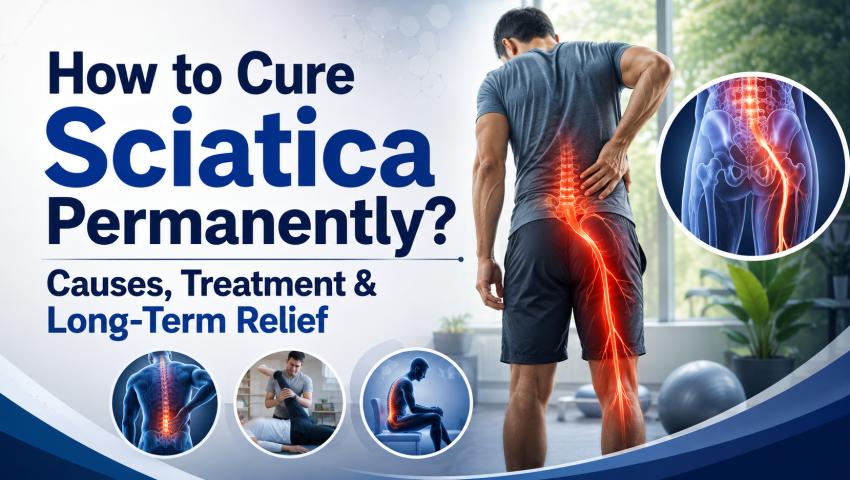
How to Cure Sciatica Permanently? Causes, Treatment & Long-Term Relief
Sciatica pain can make even simple things like sitting, walking, or getting up from bed feel difficult. If you are struggling with shooting pain from your lower back down to your leg, you are probably searching for one answer — how to cure sciatica permanently?
The answer is Sciatica can be cured permanently in most cases through a combination of correct diagnosis, physiotherapy, posture correction, and, in a few cases, medical or surgical intervention if the underlying spine problem needs it. Whether you are seeking specialized sciatica treatment in patna or looking for advanced spine care elsewhere, there is no single quick fix. The permanent cure depends entirely on treating the actual root cause of your sciatic nerve pain, not just masking the symptoms.
According to Dr. Ashwini Gaurav, Best Orthopedic Doctor in Patna with over 15+ years of experience and Director and Head of Orthopaedic Surgery at Jeevandan Health OPD, most patients get complete, lasting relief once the root cause is correctly diagnosed and treated with the right combination of physiotherapy, lifestyle correction, and medical care.
Whether you’re consulting the best ortho doctor in Patna, this blog by Dr. Ashwini Gaurav will walk you through everything — from causes and symptoms to a step-by-step treatment plan for permanent sciatica relief.
What Is Sciatica?
Sciatica is a condition where the sciatic nerve — the largest nerve of the body — gets compressed or irritated, causing pain that travels from the lower back through the hip, buttock, and down the leg. Since the sciatic nerve is also known as the longest nerve in body, running from the lower spine all the way to the feet, its compression can cause pain, numbness, or tingling anywhere along this path.
Many patients describe it simply as pain lower back to leg, which worsens with sitting, bending, or coughing.
Can Sciatica Be Cured Permanently?
This is the most common question patients ask Dr. Ashwini Gaurav — how to cure sciatica pain permanently, or as many patients in India simply put it, sciatica ka ilaj kya hai?
The answer is yes. Many patients with early or mild sciatica recover fully with rest, physiotherapy, and simple lifestyle changes within a few weeks. For sciatica caused by more serious spine conditions, a proper long-term treatment plan — and occasionally surgery — is needed to achieve permanent relief. The key is not delaying treatment and not ignoring symptoms, as untreated sciatica can worsen over time.
What Causes Sciatica?
Understanding what is sciatica pain causes is the first step towards permanent recovery. Common causes include:
- Herniated or bulging disc pressing on the nerve root
- Poor sitting or standing posture
- Spinal misalignment
- Muscle spasm in the lower back, hips, or buttocks (piriformis syndrome)
- Spinal stenosis, or narrowing of the spinal canal
- Spondylolisthesis (a slipped vertebra)
- In rare cases, a spinal infection or growth
Identifying the exact cause helps decide whether you need physiotherapy, medication, or a more advanced intervention.
Common Symptoms of Sciatica:
Sciatica symptoms can vary from person to person, but the most common ones include:
- Sore back and leg pain that radiates from the spine downward
- Sore lower back and right leg or discomfort limited to one side
- Sciatica left side pain, sometimes referred to as left sciatica, where symptoms are felt only down the left leg
- Left leg pain from hip to foot, often sharp or burning in nature
- Leg nerve swelling, tingling, or a “pins and needles” sensation
- General sore back and legs, along with stiffness
- Back ache legs ache that worsens after long sitting or standing
Symptoms of Sciatica in Women:
Symptoms of sciatica in women can sometimes overlap with other conditions like pelvic pain or pregnancy-related discomfort, which is why proper diagnosis is important rather than self-assuming it is only a back problem.
How Is Sciatica Diagnosed?
Sciatica how to diagnose is usually a two-step process. First, the doctor performs a physical examination, checking reflexes, muscle strength, and the pattern of pain. If needed, imaging tests like MRI or X-ray of the spine are done to identify the exact cause — whether it’s a disc problem, spinal stenosis, or bone-related issue.
Dr. Ashwini Gaurav always emphasises that accurate diagnosis is the real foundation for permanent sciatica treatment in patna— without knowing the cause, treatment often only manages symptoms temporarily.
How to Cure Sciatica Permanently? Step-by-Step Treatment Plan
Step 1
Find the Root Cause:
As discussed above, treatment should always begin with a clear diagnosis — this decides everything that follows.
Step 2
Control Pain and Inflammation:
In the initial phase, doctors usually recommend anti-inflammatory medication, along with rest for a short period (not prolonged bed rest) to reduce nerve irritation and swelling.
Step 3
Begin Physiotherapy:
Physical therapy treatment of sciatica plays one of the biggest roles in permanent recovery. A guided sciatic pain physiotherapy program helps release pressure on the nerve, improve movement, and reduce recurring flare-ups.
Step 4
Improve Spine Strength and Flexibility:
Core strengthening exercises and low back stretching are essential to support the spine and prevent the nerve from getting compressed again.
Step 5
Correct Lifestyle and Posture:
Simple changes — like sitting with proper back support, avoiding long hours in one position, and maintaining a healthy body weight — go a long way in learning how to relieve sciatic nerve pressure permanently.
Step 6
Treat the Underlying Spine Condition:
If sciatica is caused by a disc problem or spinal stenosis, targeted treatment (injections, advanced physiotherapy, or minimally invasive procedures) may be required to address the actual structural issue.
Step 7
Surgery (Only If Necessary):
Surgery is considered only when conservative treatments fail, or if there is severe nerve compression causing weakness or loss of bladder/bowel control — this is a medical emergency and needs immediate attention.
Best Non-Surgical Treatments for Sciatica:
Most patients find relief without ever needing surgery. Common non-surgical approaches on how to treat sciatica pain include:
- Physiotherapy and guided exercises
- Anti-inflammatory medication (as prescribed by a doctor)
- Epidural or steroid injections for severe pain
- Heat and cold therapy for short-term relief
- Posture correction and ergonomic changes at work and home
These are usually the first line of treatment recommended when patients ask how to treat sciatica in general practice.
How to Cure Sciatica Pain at Home?
Many patients want to know how to cure sciatica pain at home before consulting a doctor, and mild cases often do improve with home care. Some effective sciatica home remedies include:
- Gentle stretching and light walking instead of complete bed rest
- Applying a warm compress or ice pack to the lower back
- Sleeping with a pillow between your knees to reduce nerve pressure
- Practicing low back stretching daily to ease tightness
- Avoiding heavy lifting and long sitting hours
These sciatica pain relief home remedy tips are useful for temporary comfort, but if pain continues beyond 1–2 weeks, it’s important to consult a specialist rather than relying only on how to treat sciatica at home.
When Is Surgery Needed for Sciatica?
While most patients recover through conservative treatment, surgery may be necessary if:
- Pain is severe and doesn’t improve after several weeks of proper treatment
- There is muscle weakness or numbness that keeps getting worse
- Imaging shows a significant disc herniation or spinal stenosis pressing on the nerve
- Symptoms reach the last stage of sciatica, involving loss of bladder or bowel control (a medical emergency requiring immediate surgical evaluation)
Surgery is never the first option — it’s considered only when conservative care hasn’t given lasting relief.
When Should You See an Orthopedic Doctor?
You should consult an orthopedic specialist if you notice:
- Sciatica back problems that don’t improve within two weeks
- Pain that is getting worse instead of better
- Numbness, tingling, or weakness in the leg or foot
- Difficulty walking or standing for even short periods
- Any bladder or bowel control issues (seek immediate medical attention)
Dr. Ashwini Gaurav, known as one of the trusted names among patients searching for the best ortho doctor in Patna, recommends not waiting too long before getting a proper spine evaluation, as early treatment significantly improves the chances of permanent recovery.
Conclusion:
Sciatica can feel overwhelming, but with the right diagnosis and treatment plan, permanent relief is achievable for most patients. Whether it’s through physiotherapy, lifestyle correction, or in rare cases, surgery — sciatic nerve pain and relief is very much possible with the right guidance.
If your symptoms are persistent or getting worse, don’t self-diagnose or depend only on home remedies. Book a consultation with Dr. Ashwini Gaurav at Jeevandan Health OPD to get an accurate diagnosis and a personalised treatment plan for long-term sciatica relief.
Visit Dr. Ashwini Gaurav for an accurate diagnosis and expert spine care.