

- 01/09/2025
- Dr. Ashwini Gaurav
- 0 Comments
- Blog
What Is a Heel Bone Spur? Complete Guide to Heel Bone Spurs Treatment
If you have ever felt a sharp, stabbing pain in your heel the moment you step out of bed in the morning, you are not alone. Many people in India suffer from this condition, often dismissing it as “general tiredness” or a “small swelling.” However, that poking sensation in your foot could be a heel bone spur.
In this guide, we will explore everything you need to know about heel bone spurs treatment, causes, and how you can find relief. To provide you with the most reliable medical insights, we have consulted Dr. Ashwini Gaurav, the Best Orthopedic Surgeon in Patna. With over 15 years of experience and a track record of 15,000+ happy patients, Dr. Gaurav is a leading expert in joint and bone health.
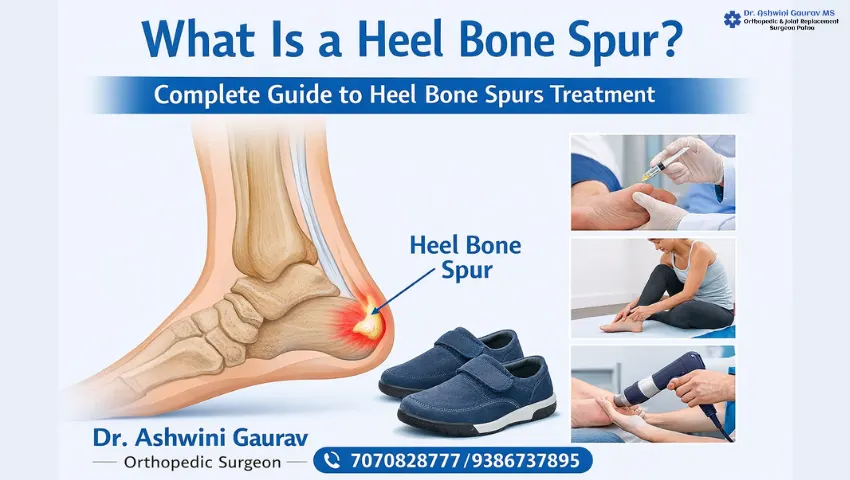
What Is a Heel Bone Spur? (Heel Spurs Meaning)
A heel bone spur (also known as a calcaneal spur) is a bony, calcium-like growth that develops on the underside of your heel bone. It often looks like a small hook or a “thorn” on an X-ray.
While the spur itself is made of bone, the pain usually doesn’t come from the bone “poking” you. Instead, the pain is often caused by the inflammation of the soft tissues (like the plantar fascia) surrounding the spur bone heel.
- Fact: About 1 in 10 people have heel spurs, but many don’t even know it because they don’t feel any pain!
- Medical Term: It is often referred to as a plantar calcaneal spur.
Causes of Heel Bone Spurs (Calcaneal Spur Causes)
Why does a bone growth in heel happen? It doesn’t happen overnight. It is usually a result of long-term strain on your foot muscles and ligaments.
Common calcaneal spur causes include:
- Repetitive Stress: Running or jumping on hard surfaces (very common in athletes).
- Improper Footwear: Wearing worn-out shoes or heels that don’t provide arch support.
- Excess Weight: Obesity puts extra pressure on the heel bone.
- Walking Gait: Walking in a way that puts uneven pressure on the heel.
- Age: As we age, the protective fat pad on our heel thins out, leading to spurs on feet.
Symptoms of Heel Bone Spurs
Many people ask, “How do I know if I have a spur in heel?” While some people have no symptoms, others experience:
- Morning Pain: A sharp, “pin-prick” pain during the first few steps after waking up.
- Dull Ache: A constant, nagging pain in the heel throughout the day.
- Inflammation: Visible swelling or redness at the bottom of the heel.
- Tenderness: The area feels “sore” to the touch, making it hard to walk barefoot on hard floors.
- Note from Dr. Ashwini Gaurav: “If you feel a bone enlargement in ankle or heel area combined with chronic pain, it is essential to get an X-ray to differentiate between a spur and simple muscle strain.”
How Heel Bone Spurs Are Diagnosed
To confirm if you have a bone spur foot, doctors usually follow these steps:
- Physical Exam: Checking for points of tenderness.
- Medical History: Asking about your activity levels and footwear.
- X-ray Calcaneus: This is the “gold standard” to see the actual bone growth on foot.
- Ultrasound: To check for inflammation in the surrounding ligaments.
Heel Bone Spurs Treatment: Complete Guide
The good news is that 90% of people get better without surgery. Treatment for heel spurs focuses on reducing inflammation and taking the pressure off the heel.
1. Non-Surgical Treatment for Heel Bone Spurs
Most patients respond well to conservative care:
- Rest: Giving your feet a break from high-impact activities.
- Ice Packs: Applying ice for 15 minutes to reduce heel pad pain.
- Orthotics: Using heel support for pain, such as silicone heel cups or custom shoe inserts.
- Footwear for Heel Spur: Switching to shoes with thick, cushioned soles and good arch support.
2. Medical Treatment for Heel Bone Spurs
If rest doesn’t work, medical intervention may be needed:
- Anti-inflammatory Meds: Over-the-counter tablets to reduce swelling.
- Corticosteroid Injections: A shot into the heel to provide quick, temporary relief from severe inflammation.
3. Advanced Heel Bone Spurs Treatment Options
Modern technology has introduced highly effective, minimally invasive treatments:
- Laser Treatment: Uses light energy to stimulate cellular repair and reduce pain.
- Platelet-Rich Plasma (PRP) Therapy: This involves injecting a concentrated version of your own blood (rich in growth factors) into the heel. It speeds up the natural healing of the damaged tissues.
4.Surgical Treatment for Heel Bone Spurs
Surgery is only considered if the pain persists for more than 6–12 months despite other treatments.
- When Is Surgery Needed?
▪ The pain is so severe it affects daily walking.
▪ Non-surgical methods (injections, exercises, orthotics) have failed. - Types of Heel Spur Surgery
▪ Plantar Fascia Release: The surgeon cuts part of the ligament to release tension.
▪ Spur Removal: Actually removing the bone spur in heel using specialized tools. - Recovery After Surgery
▪ Recovery can take anywhere from 3 weeks to 3 months. You may need to wear a surgical shoe or a boot and gradually return to walking as per the instructions of your Bone Specialist.
How to Prevent Heel Bone Spurs
Prevention is always better than a cure. To avoid a foot bone spur, follow these tips:
- Don’t ignore heel pain: If your “aedi” (heel) hurts, rest immediately.
- Warm-up: Always stretch your calves and feet before exercising.
- Maintain a healthy weight: Reduces the load on your calcaneus bone.
- Choose the right shoes: Avoid flat flip-flops or high heels for long durations.
Conclusion
A heel bone spur can be a painful hurdle, but with the right heel bone spurs treatment, you can get back on your feet quickly. From simple stretches and home remedies for heel pain to advanced treatments like PRP therapy, there are many ways to manage this condition.
If you are in Bihar and struggling with persistent heel or joint pain, it is best to consult an expert. Dr. Ashwini Gaurav, the Best Orthopedic Surgeon in Patna, offers world-class care at Jeevandan Health OPD. With his vast experience in complex bone and joint disorders, he can help you find a permanent solution to your pain.
FAQs about Heel Bone Spurs
A bone spur (medically called an osteophyte) is a smooth, bony growth that develops over a long period.
- It usually forms where bones meet each other—in your joints.
- In the case of the foot, it is a calcaneal spur, which is a calcium deposit on the underside of the heel bone.
- Most spurs are not “sharp” like a needle; they are usually smooth, but they cause pain by rubbing against nearby nerves or ligaments.
It is important to understand a medical fact: You cannot “dissolve” a bone spur with food or creams once it has formed. However, you can “silence” it so it no longer hurts. Here is how to manage it naturally:
- Reduce Inflammation: Use ginger or turmeric in your diet, as these are natural anti-inflammatories.
- Apple Cider Vinegar Soak: Many people use a warm water soak with a bit of ACV to help reduce swelling around the spur bone heel.
- Weight Management: Reducing body weight decreases the pressure on the heel, stopping the spur from growing further.
- Magnesium Intake: Magnesium helps the body absorb calcium properly, preventing further abnormal bone growth in heel.
While “healing” the bone growth takes time, you can get rid of the pain very quickly by following these steps:
- The R.I.C.E Method: Rest, Ice, Compression, and Elevation. This is the fastest way to calm a painful flare-up.
- Proper Orthotics: Immediately start using silicone heel cups or “MCR” (Micro Cellular Rubber) footwear. This cushions the bone spur foot and stops the rubbing.
- Stretching: Perform “Calf Stretches” and “Plantar Fascia Stretches” every morning before you take your first step.
- Medical Consultation: For the fastest professional relief, visit an expert like Dr. Ashwini Gaurav in Patna, who may suggest a single localized injection to stop the pain instantly.
If you are looking for a home remedy for calcaneal spur or general heel pain, try these simple Indian household methods:
- Cold Bottle Roll: Freeze a plastic water bottle. Sit in a chair and roll your foot over the frozen bottle for 10-15 minutes. This provides “cold therapy” and a massage at the same time.
- Warm Oil Massage: Use warm mustard oil mixed with a pinch of garlic. Massage the heel gently to improve blood circulation.
- Epsom Salt Soak: Add 2 spoons of Epsom salt to a bucket of warm water. Soak your feet for 20 minutes before sleeping to relax the muscles around the spur on foot.
- Avoid Barefoot Walking: Even inside the house, wear soft slippers. Walking barefoot on hard marble floors is the biggest enemy of a heel bone spur.
