

- 13/01/2021
- Dr. Ashwini Gaurav
- 0 Comments
- Uncategorized, Hip Replacement
AVN (Avascular Necrosis): How AVN Bone Disease Affects Your Joints
Introduction: AVN (Avascular Necrosis)
Persistent joint pain can be more than just “getting older” or a simple strain. If you are feeling a deep, throbbing ache in your hip, shoulder, or knee, you might be dealing with a condition known as AVN or Avascular Necrosis.
When it comes to complex bone conditions, experience is the only thing that counts. Dr. Ashwini Gaurav, with over 15 years of experience, serves as the Director and Head of Orthopaedic & Joint Replacement Surgery at Jeevandan Health OPD. Recognized widely as the Best Orthopaedic Doctor in Patna, Bihar, he has dedicated his career to helping patients reclaim their mobility from the debilitating effects of bone necrosis.
In this comprehensive guide, we will break down everything you need to know about avn bone disease, from its silent early stages to the most advanced avn treatment in India.
What Is AVN Bone Disease?
To understand what is avn, we first need to look at the AVN full form: Avascular Necrosis.
In medical terms, “Avascular” means a lack of blood supply, and “Necrosis” means tissue death. Therefore, avn meaning is quite literally the death of bone tissue because it isn’t getting enough blood. Also referred to as osteonecrosis, ischemic necrosis, or simply bone necrosis, this condition is a cellular-level disaster. Because our bones are living tissues, they require a constant flow of oxygen-rich blood to remain strong and to repair the microscopic “wear and tear” that happens every day. When that blood flow is cut off, the bone begins to “starve,” becomes brittle, and eventually develops tiny fractures that lead to a total collapse of the joint.
What are the AVN Causes?
Many patients ask Dr. Ashwini Gaurav, “Why did this happen to me?” The causes of avn can be varied, but they generally fall into a few specific categories:
- Trauma and Injury: This is a very common cause of avn hip. A hip dislocation or a fracture in the neck of the femur can physically tear the delicate blood vessels that supply the bone.
- Steroid Use: Long-term use of high-dose corticosteroids (often prescribed for asthma, arthritis, or skin conditions) is a leading cause of avn disease. Steroids can increase fat levels in the blood, which may block the small vessels in the bone.
- Excessive Alcohol Intake: Similar to steroids, heavy alcohol consumption leads to fatty deposits in the blood vessels, cutting off the vital supply to the avn bone.
- Medical Conditions: Diseases like Sickle Cell Anemia, Gaucher disease, and even certain treatments like radiation therapy for cancer can damage the bone’s blood supply.
- Idiopathic AVN: In some cases, the cause remains unknown, which is why regular check-ups with an expert like Dr. Ashwini Gaurav are essential for early detection.
Early AVN Symptoms
One of the biggest challenges with the avn problem is that it is a “silent” thief in the beginning. You may have the disease for months before you feel a single pang of pain. However, as the necrosis disease progresses, you will notice:
- Mild Joint Pain: Initially, the avn pain may only occur when you put weight on the joint.
- Groin Pain: For those with avn hip symptoms, the pain is usually felt in the groin area or deep in the buttocks.
- Stiffness: You might find it harder to tie your shoelaces or get out of a low chair.
- Rest Pain: In later stages of osteonecrosis symptoms, the pain doesn’t go away even when you are lying down or sleeping.
If you are experiencing any of these, especially symptoms of avn hip, it is critical to consult an orthopedic specialist immediately.
How Healthy Bone Blood Supply Works
To visualize how avn bone disease works, imagine a tree. If you cut off the water to one specific branch, that branch will eventually turn brown, become brittle, and snap off, even if the rest of the tree looks healthy. Your bones are constantly “remodeling.” Your body is always breaking down old bone and replacing it with new, strong bone. This process requires a massive amount of “fuel” delivered via the blood. When ischemic necrosis sets in, the “construction crew” in your body stops receiving materials. The old bone continues to wear down, but no new bone is there to take its place. This is what is avn disease at its core—a failure of the body’s natural repair system.
How AVN Affects Different Joints (Hip, Knee, Shoulder)
While avn can strike any bone, it has a preference for the “ends” of long bones where blood supply is already somewhat limited.
A. AVN Hip Joint
The hip is the most common site. AVN of femoral head (the “ball” of the hip joint) is particularly devastating because the hip carries the majority of your body weight. Whether it is avascular necrosis of left hip or the right, the result is a limp and a significant loss of quality of life.
B. AVN Knee
While less common than the hip, osteonecrosis in the knee can make walking almost impossible. It usually affects the inner side of the knee joint.
C. AVN Shoulder
Symptoms here include pain when reaching overhead or behind your back. If left untreated, the shoulder joint can become permanently stiff.
Stages of AVN Progression
Dr. Ashwini Gaurav categorizes the progression of this disease into four main stages to determine the best course of action:
- Stage I: The bone is dying, but it still looks normal on an X-ray. Only an MRI can catch it here.
- Stage II: Early damage is visible on X-ray, but the round shape of the joint is still intact. This is the “window of opportunity” for many treatments.
- Stage III: The structural integrity fails. The bone under the cartilage collapses (the “crescent sign”).
- Stage IV: The joint is completely deformed. This leads to severe secondary arthritis.
How does Dr. Ashwini Gaurav diagnose AVN?
Early diagnosis is the difference between saving your natural joint and needing a replacement. In Patna, Dr. Ashwini Gaurav utilizes a rigorous diagnostic protocol:
- Clinical Evaluation: A thorough review of your medical history, including any past steroid use or injuries.
- Physical Assessment: Testing your range of motion and identifying the exact location of the avn pain.
- Imaging: While Avascular necrosis X-rays are useful for late stages, Dr. Ashwini Gaurav often relies on MRI scans. An MRI is the most sensitive tool available to detect osteonecrosis in Stage I before the bone collapses.
Treatment Options for AVN Bone Disease at Jeevandan Health Patna
The goal of avascular necrosis treatment is to stop the death of the bone and encourage new growth. At Jeevandan Health, the approach is customized to the patient’s age and the stage of the disease.
- Core Decompression: This is a surgical procedure where a small hole is drilled into the dead bone. This reduces pressure, allows for better blood flow, and stimulates the production of new bone tissue.
- Bone Grafting: A piece of healthy bone is transplanted to the area of bone necrosis to provide structural support.
- Regenerative Therapy: Using the body’s own cells to kickstart the healing process in the avn hip joint.
Non-Surgical Management and Lifestyle Care for AVN
If the avn disease is caught very early, non-surgical methods may be used to slow it down:
- Activity Modification: Reducing high-impact activities like running or jumping.
- Weight Bearing Restrictions: Using crutches or a walker to take the pressure off the avn bone.
- Medications: Dr. Ashwini Gaurav may prescribe medications like Alendronate or blood thinners to improve the environment within the bone.
- Physiotherapy: Specific exercises to keep the surrounding muscles strong and the joint flexible.
When AVN Surgery Becomes Necessary
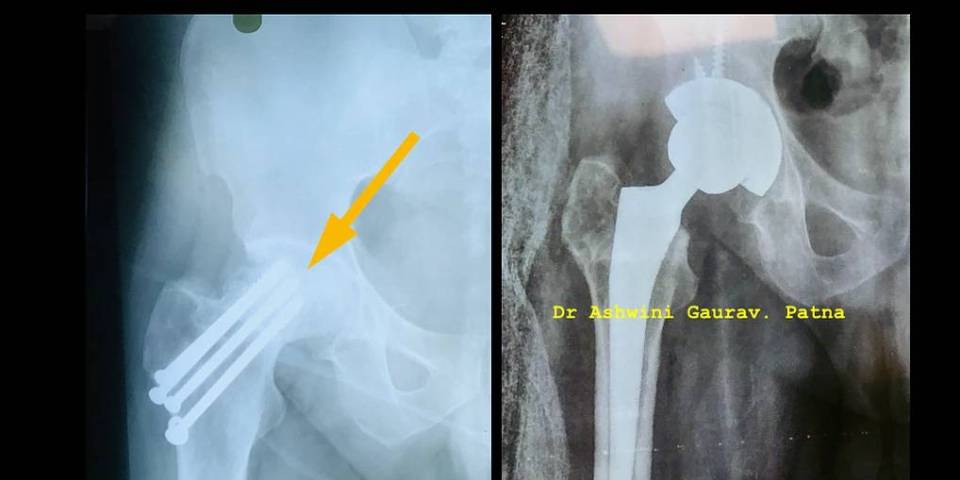
Unfortunately, if the disease is caught in Stage III or IV, the bone has often already “caved in.” At this point, avn and hip replacement is usually the most reliable way to restore a patient’s life. Dr. Ashwini Gaurav is a specialist in avn of the hip treatment using modern, minimally invasive techniques. A Total Hip Replacement involves replacing the damaged osteonecrosis of femoral head with a durable ceramic or metal implant. The results are often life-changing, with patients returning to walking and even light sports without the constant agony of avn pain.
When to See an Orthopedic Doctor in Patna
You should not wait for the pain to become unbearable. If you have a history of steroid use, a previous hip injury, or you’ve noticed a persistent limp, it is time to act. Early intervention is the key to avoiding major surgery.
As the Best Orthopaedic Doctor in Patna, Dr. Ashwini Gaurav provides a patient-centered approach. At Jeevandan Health OPD, the focus isn’t just on treating a scan; it’s about treating the person and ensuring they can return to their daily routines as quickly as possible.
Conclusion
AVN (Avascular Necrosis) is a daunting diagnosis, but it is not a dead end. With the advancements in modern orthopedics and the expertise of a seasoned surgeon like Dr. Ashwini Gaurav, there are more options than ever to save your joints and maintain your mobility.
From early-stage osteonecrosis symptoms management to complex avn and hip replacement surgeries, the team at Jeevandan Health in Patna is equipped to handle every stage of this condition.
Don’t let joint pain stop your life.
Frequently Asked Questions About AVN
The AVN full form is Avascular Necrosis. In some medical circles, it is also referred to as osteonecrosis or ischemic necrosis.
AVN is a serious avn bone disease where the blood supply to a section of the bone is interrupted. Because bone is living tissue, it requires blood to stay healthy. When the blood flow stops, the bone tissue begins to die, eventually leading to the collapse of the joint. This condition most commonly affects the hip, leading to avn hip or avn of femoral head. Dr. Ashwini Gaurav emphasizes that while it can happen in any bone, the hip is the most vulnerable joint.
Necrosis is the medical term for the death of body tissue. It occurs when too little blood flows to the tissue, whether due to injury, exposure to toxins, or certain diseases. In the context of bone necrosis, the structural part of your joint becomes brittle and “dies,” which is why it is often called a necrosis disease. Unlike healthy cells that regenerate, necrotic bone cells cannot repair themselves without medical intervention like avascular necrosis treatment.
AVN is not a life-threatening condition in terms of your lifespan, but it is a “lifestyle-threatening” disease. If left untreated, the avn problem progresses quickly. Within 2 to 5 years, a high percentage of patients with untreated avn hip joint issues will experience a complete bone collapse.
However, with the right avn treatment in India—such as core decompression or avn and hip replacement performed by an expert like Dr. Ashwini Gaurav—you can live a full, active, and pain-free life for decades. The key is catching the avn symptoms early.
In a medical report or clinical setting, the AVN full form in medical terms stands for Avascular Necrosis. You might also see it written as Osteonecrosis of the femoral head if it specifically involves the hip ball.
