

- 22/10/2026
- Dr. Ashwini Gaurav
- 0 Comments
- Knee Replacement
Common Myths About Robotic Knee Replacement: What’s True and What Isn’t?
Knee pain can make simple daily work very difficult: walking to the market, climbing stairs, sitting on the floor for puja, or even sleeping peacefully at night. Medicines, injections and physiotherapy give relief for some time, but when the joint is badly worn out, knee replacement is often the best way to get your life back.
Today, more and more people are asking about robotic knee replacement surgery in Patna. But the word “robotic” also brings fear. Many people think a machine will operate on them, or that the surgery is too new, too costly or too risky. These doubts make patients delay treatment, and the pain keeps growing.
In this blog, Dr Ashwini Gaurav, Best Orthopedic Doctor In Patna and Director and Head of Orthopaedic & Joint Replacement Surgery, Robotic Knee Replacement Surgery at Jeevandan Health OPD, clears the most common myths about robotic knee replacement in simple words. After reading, you can talk to your surgeon with more confidence and make the right decision for your knees.
What Is Robotic Knee Replacement?
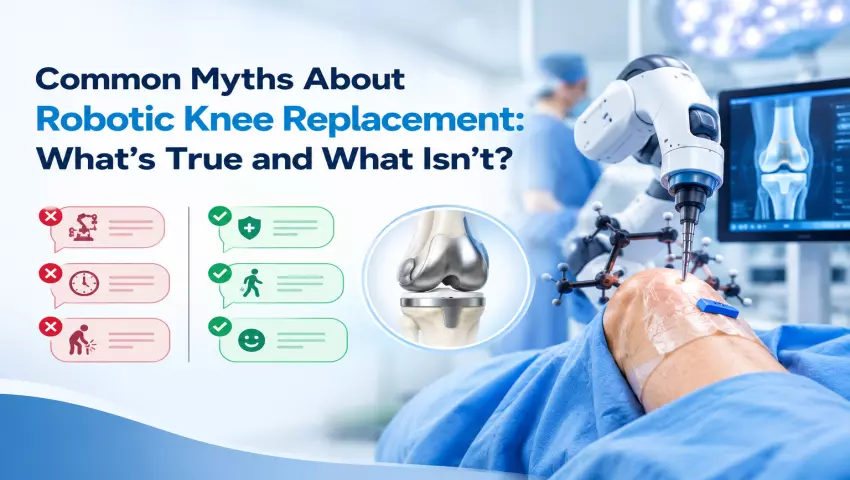
Robotic knee replacement is a type of knee replacement surgery in which the surgeon uses a robotic arm to place the artificial knee (implant) with great accuracy. Here is how it works:
- Before surgery, a 3D model of your knee is made, often from a CT scan.
- Using this model, the surgeon plans the size, position and alignment of the implant for your knee.
- During surgery, the robotic arm gives live guidance and gentle “touch” (haptic) feedback, so the surgeon stays within the planned limits.
In simple words, conventional surgery depends on the surgeon’s eye, hand and standard instruments. Robotic surgery adds a detailed personal plan and live guidance on top of the surgeon’s skill.
8 Common Myths About Robotic Knee Replacement:
Myth 1: "A robot performs the surgery on its own."
Fact: This is the biggest fear, and it is not true. The robot cannot think or act by itself. The surgeon is in full control from the first step to the last. Think of a GPS in your car: it shows the best route, but the driver still drives. Dr Ashwini Gaurav explains to patients that the robot only follows the plan made by the surgeon and helps keep every bone cut within safe limits. It supports the surgeon’s skill and never replaces it.
Myth 2: "Robotic surgery is experimental and riskier."
Fact: Robotic-assisted knee replacement has been used for more than ten years, and a large number of patients across the world have been treated. The basic risks are the same as in any knee replacement, such as infection, blood clots and nerve injury. Because the robot helps with accurate bone cuts and implant position, it may lower problems linked to wrong placement and damage to the soft tissues around the knee. No surgery is completely risk-free, so a proper check-up before surgery is important.
Myth 3: "Recovery is longer and more painful."
Fact: Often the opposite is true. With careful planning, there is usually less damage to the tissues around the knee, which can mean less pain and earlier walking. A usual pattern looks like this:
- Walking with support within the first few days
- A short hospital stay
- Big improvement in 6 to 12 weeks
- Full recovery in about 6 to 12 months
Every patient heals differently, and regular physiotherapy makes a big difference.
Myth 4: "It is only for complex cases or severe deformities."
Fact: Robotic surgery is very helpful in knees with big deformity or unusual anatomy, but it is not limited to them. Most people who need a knee replacement can also be considered for a robotic one. Whether it suits you is decided by the surgeon after examining your knee, X-rays and overall health.
Myth 5: "Robotic knee replacement is too expensive for what it offers."
Fact: The upfront cost can be higher because the technology is advanced. But accurate implant placement may reduce the chance of early wear and the need for a second (revision) surgery, and a smoother recovery can mean fewer days away from work and daily routine. Over the long term, this can be good value.
For robotic knee replacement surgery in Patna, the total cost depends on the type of implant, the hospital room you choose, the number of days in hospital and any other medical conditions. Dr Ashwini Gaurav advises every patient to ask for a clear written estimate before surgery. Also check with your insurance company or TPA, because many health policies cover knee replacement, and you should confirm the exact cover, waiting period and hospital package beforehand.
Myth 6: "The surgery takes much longer in the operation theatre."
Fact: A robotic knee replacement usually takes about one to two hours. The little extra time goes into setting up the system and following the detailed plan, and this time is used to improve accuracy.
Myth 7: "The scar will be bigger."
Fact: Robotic surgery is done through targeted cuts, and the incision is generally small and neat. A smaller incision also means less trauma to the skin and tissues, which supports faster healing.
Myth 8: "The benefits are not big enough to matter."
Fact: The benefits are real and you can feel them in daily life: better alignment, a more natural-feeling knee, less pain and the chance of a longer-lasting implant. With good alignment and proper care, knee implants are designed to last 15 to 20 years or even more.
Other Myths Patients Often Believe:
- “I am too old for knee replacement.” Age alone is not the problem. Many people in their seventies and even eighties do well after surgery. What matters is your general health and fitness for anaesthesia.
- “Knee replacement is only for the elderly.” Not true. Younger people with severe arthritis, injury or deformity can also need it.
- “I should delay surgery as long as possible.” Surgery should not be rushed, but waiting too long can damage the joint further, weaken the muscles and make walking harder. The right time is when pain and stiffness stop you from living normally despite proper treatment.
Why Accuracy Matters So Much?
The long-term success of a knee replacement depends a lot on how well the implant is placed. Even a small mistake in alignment can cause uneven wear, a feeling of instability and, in some cases, the need for another surgery. Robotic planning helps the surgeon balance the ligaments around the knee, so that the joint feels stable and moves smoothly.
Robotic Knee Replacement: Advantages and Disadvantages
Aftercare After Robotic Knee Replacement: Do's and Don'ts
Good surgery needs good recovery. Dr Ashwini Gaurav and the team at Jeevandan Health OPD guide every patient on rehabilitation, and these simple rules help a lot.
Do’s
- Follow your physiotherapy exercises regularly
- Take pain medicines exactly as prescribed
- Keep the wound clean and dry
- Keep your leg raised to reduce swelling
- Eat healthy food and drink enough water
- Use a walker or stick as advised
- Attend all follow-up visits
Don’ts
- Do not skip physiotherapy sessions
- Do not overdo exercise or ignore pain
- Do not lift heavy weights
- Do not cross your legs in the early weeks
- Do not ignore redness, warmth or discharge near the wound; call your doctor at once
- Do not drive until your doctor allows
Am I a Good Candidate? Questions to Ask Your Surgeon
If you are looking for a robotic knee replacement surgeon in Patna, do not decide only on the basis of the machine. The surgeon’s training and experience matter equally. Before surgery, Dr Ashwini Gaurav examines your knee, goes through your X-rays and talks about your daily activities and health conditions, so that the treatment plan suits you.
Here are some questions you can ask any surgeon:
- How many robotic knee replacements have you performed?
- Is robotic surgery the right choice for my knee and my age?
- What is the total cost, and what will my insurance cover?
- What will my recovery timeline look like?
- What risks should I know about?
Frequently Asked Questions (FAQ's):
Yes. The surgeon stands at the operating table and controls the robotic arm throughout the surgery.
Usually one to two hours.
Most patients walk with support in a few days, improve a lot in 6 to 12 weeks, and recover fully in about 6 to 12 months.
Yes. It restores strength, flexibility and movement, and it is a key part of recovery.
With good alignment and proper care, implants are designed to last 15 to 20 years or more.
It is generally small and neat, compared with a larger incision in open techniques.
Most people who need a knee replacement can be considered. Your surgeon will confirm after a full check-up.
Conclusion: Don't Let Fear Delay Your Treatment
A robot does not operate on you. The surgeon does, with extra accuracy and a plan made just for your knee. If knee pain is stopping you from walking, working or enjoying time with your family, do not wait for the pain to become unbearable.
If you are searching for robotic knee replacement surgery in Patna, Visit Dr Ashwini Gaurav at Jeevandan Health OPD. After a proper evaluation, you will know whether robotic knee replacement is right for you, and what to expect at every step.
Book your appointment today and take the first step towards pain-free walking.
This blog is for general information only and is not a substitute for medical advice. Please consult your doctor for advice about your own condition.