

- 15/10/2026
- Dr. Ashwini Gaurav
- 0 Comments
- Knee Replacement
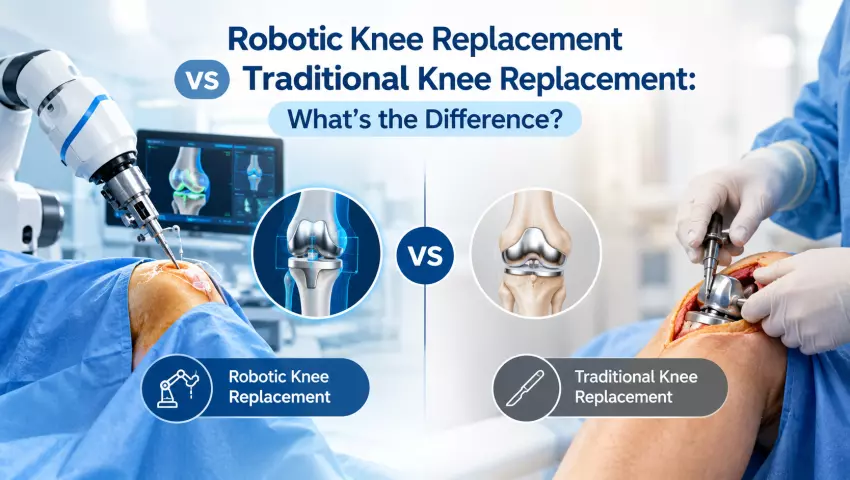
Robotic Knee Replacement vs Traditional Knee Replacement: What’s the Difference?
Knee replacement surgery has come a long way in the last few years. What once sounded like a “futuristic” idea – a robot helping in your surgery – is now a common and trusted option in many hospitals across India, including Patna. Naturally, when patients hear about robotic knee replacement, they have a lot of questions. Is it safe? Is it really better than the old method? Is it worth the extra cost?
To answer all these doubts, this blog will give you a simple, side-by-side comparison of Robotic Knee Replacement vs Traditional Knee Replacement Surgery, so you can make an informed decision along with your doctor.
For expert advice on this topic, many patients across Bihar rely on Dr. Ashwini Gaurav, widely recognised as the Best Orthopedic Doctor in Patna and the Best Robotic Knee Replacement Surgeon in Patna. He currently serves as the Director and Head of Orthopaedic & Joint Replacement Surgery, with special expertise in robotic knee replacement surgery at Jeevandan Health OPD. With his experience in both traditional and robotic techniques, Dr. Ashwini Gaurav helps patients choose the treatment that is right for their specific knee condition.
Let’s understand both these techniques in detail.
What Is Traditional Knee Replacement Surgery?
Traditional knee replacement surgery has been used successfully for several decades and remains a well-proven and reliable option even today.
In this method, the surgeon depends on manual instruments, X-ray-based measurements, and their own clinical experience to plan and perform the surgery. The surgeon personally measures the bone, marks the cutting points, and manually removes the damaged portion of the knee joint before fixing the new implant.
Strengths of Traditional Knee Replacement:
- Long track record of safe, successful outcomes
- Well understood by surgeons across all hospitals
- Suitable for a wide range of patients
Limitations:
Since this technique depends heavily on manual skill, there can be some variation in accuracy from patient to patient, based on the surgeon’s individual experience and judgement.
What Is Robotic Knee Replacement Surgery?
Now let’s understand what is robotic knee replacement surgery and how it is different.
Many people wonder, “what is robotic surgery for knee replacement?” – and it’s important to clear a common myth first: the robot does not perform the surgery on its own. In robot assisted knee surgery, the robotic arm works as a highly precise tool in the surgeon’s hands, while the surgeon remains in full control at every step.
Before the operation, the surgical team uses CT scans to create a personalised, detailed 3D model of the patient’s knee. This model helps in planning the exact surgical approach in advance – something that is simply not possible with traditional methods.
What Does the Robotic Arm Actually Do?
During robotic total knee replacement surgery, the robotic system assists the surgeon in:
- Preparing the bone with high accuracy
- Positioning the implant correctly
- Balancing the implant for natural movement
- Checking and confirming the right fit before finalising
This combination of the surgeon’s expertise and robotic precision is what makes robotic assisted knee replacement such an advanced option today.
Key Differences Between Robotic and Traditional Knee Replacement:
Here is a simple breakdown of how robotic knee joint replacement differs from the traditional approach:
This table shows why more patients today are choosing robotic total knee replacement over the older method, especially for complex knee deformities.
Advantages of Robotic Knee Replacement:
- Lower Long-Term Costs: Although the initial cost of robotic knee replacement can be slightly higher, patients often experience fewer complications, which means fewer hospital visits later. Faster recovery also means an earlier return to work and normal life.
- Better Patient Outcomes: Studies have shown that robotic surgery for total knee replacement leads to fewer hospital readmissions and requires less intensive rehabilitation. The robotic arm also helps remove damaged tissue more precisely, improving overall recovery.
- Higher Patient Satisfaction: Because of quicker recovery and more natural knee movement after surgery, patients undergoing robotic knee replacement surgery generally report higher satisfaction with their results.
Advantages of Traditional Knee Replacement:
Traditional surgery still holds an important place in orthopaedic care, and it is not necessarily “outdated.” Here’s why:
- Decades of Proven Data: Traditional knee replacement surgery has years of long-term research and clinical results backing its safety and effectiveness.
- Wider Availability: Not every hospital has robotic technology, so traditional surgery remains widely accessible across India, including smaller towns and cities.
- Lower Upfront Cost: For patients who are budget-conscious, traditional surgery generally costs less initially compared to robotic knee replacement cost.
- Suitable for Many Standard Cases: For simpler, less complex knee conditions, a skilled surgeon can achieve excellent results even without robotic assistance.
Recovery Comparison: Robotic vs Traditional
These are general estimates. Actual recovery time depends on the patient’s health, age, and the surgeon’s assessment.
Cost Comparison: Robotic vs Traditional Knee Replacement
One of the most common questions patients ask is about robotic surgery cost in India compared to the traditional method.
- Traditional Knee Replacement: Generally more affordable upfront
- Robotic Knee Replacement Surgery Cost in India: Higher initial investment, but often more cost-effective in the long run
When we talk about the cost of robotic knee replacement, it typically ranges higher than traditional surgery because of the advanced technology, personalised planning, and specialised equipment involved. However, since robotic knee replacement cost in India also factors in fewer complications and lower chances of revision surgery, many patients find it a worthwhile long-term investment.
If you want a detailed, personalised cost estimate, it’s best to consult a specialist like Dr. Ashwini Gaurav, who can guide you based on your specific knee condition.
Is Robotic Knee Replacement Surgery Better?
This is the question most patients want answered clearly – is robotic knee replacement truly better?
Based on available studies and clinical experience, robotic vs traditional knee replacement surgery outcomes generally favour the robotic method in terms of accuracy, alignment, and recovery speed. The reduced trauma to bone and surrounding tissue leads to better healing and more natural knee function.
However, it is important to remember that robotic technology is a tool, not a replacement for the surgeon. The success of robot assisted knee surgery still depends heavily on the expertise and judgement of the surgeon operating it. This is why choosing an experienced specialist like Dr. Ashwini Gaurav, who understands both traditional and robotic total knee replacement surgery, is so important for the best possible outcome.
Who Is a Good Candidate for Each Type?
Not every patient needs the same approach. The right choice depends on several factors:
Robotic knee replacement may be recommended for:
- Patients with complex knee deformities
- Younger, more active patients wanting long-term implant durability
- Patients who prioritise faster recovery
Traditional knee replacement may be suitable for:
- Patients with simpler, more standard knee conditions
- Patients looking for a more budget-friendly option
- Cases where robotic technology may not add significant benefit
A detailed knee evaluation by an expert like Dr. Ashwini Gaurav can help determine which approach will work best for your specific case.
Questions to Ask Your Orthopedic Surgeon:
Before deciding between robotic knee replacement and traditional surgery, it’s a good idea to ask your doctor:
- Is robotic surgery recommended for my specific knee condition?
- What are the risks and benefits of each option in my case?
- What is the expected recovery timeline for me personally?
- What is the total cost, including post-surgery physiotherapy?
- How many robotic and traditional knee surgeries have you performed?
FAQs:
No. In robotic knee replacement surgery, the robotic arm only assists the surgeon with precision tasks. The surgeon remains fully in control throughout the procedure.
Both techniques are considered safe when performed by an experienced surgeon. However, robotic total knee replacement often offers more precise alignment, which can lead to better long-term outcomes.
In most cases, yes. Many health insurance policies cover robotic knee replacement surgery, though it’s best to confirm coverage details with your insurance provider beforehand.
Traditional knee replacement typically takes 3-4 months for full recovery, while robotic knee replacement may allow a slightly faster return to normal activity, often around 2-3 months.
This depends on your specific knee condition, age, activity level, and budget. Consulting an experienced specialist like Dr Ashwini Gaurav will help you make the right, personalised decision.
Conclusion:
Both robotic knee replacement and traditional knee replacement surgery are safe and effective options for treating knee joint problems. While traditional surgery has decades of proven reliability, robotic total knee replacement surgery in patna offers added precision, often resulting in better alignment, faster recovery, and higher patient satisfaction.
Ultimately, the best choice depends on your individual knee condition and health needs – and this is best decided together with an experienced orthopaedic surgeon.
If you are looking for expert guidance, Visit Dr. Ashwini Gaurav, the Best Robotic Knee Replacement Surgeon in Patna, can help you understand which option – robotic or traditional – is right for you.
Book your consultation with Dr. Ashwini Gaurav today and take the first step towards a healthier, pain-free knee.