


- 19/11/2025
- Dr. Ashwini Gaurav
- 0 Comments
- Joint Pain
Frozen Shoulder: Why It’s More Common Frozen Shoulder in Winter?
When winter arrives, many people start complaining of shoulder stiffness and pain that makes even daily tasks difficult. This condition is popularly known as a frozen shoulder, and it tends to worsen during the cold season. According to Dr. Ashwini Gaurav, an experienced Orthopedic Specialist in Patna with more than 15 years of expertise in joint and bone care, winter weather can significantly aggravate shoulder immobility and discomfort. Understanding the reason of frozen shoulder in winter, Shoulder frozen Treatment and its link with low temperatures can help you manage and prevent it effectively.
Dr. Ashwini Gaurav is currently practicing as the Director and Head of the Department of Orthopaedic & Joint Replacement Surgery at Jeevandan Health OPD, Patna. He is a famous Joint Replacement Surgeon in Patna, Bihar, well-known for his advanced techniques in joint replacement and complex orthopedic procedures. He has completed MBBS (Hons) from Jawaharlal Nehru Medical College, Bhagalpur and MS (Orthopaedics) from the renowned Patna Medical College, where he earned a Gold Medal for his outstanding academic performance. A highly academic professional, he has published over 10 research papers in national and international journals.
What is Shoulder Frozen?
A frozen shoulder, medically known as adhesive capsulitis, is a painful and stiff condition where the shoulder joint capsule thickens and tightens, restricting movement. When patients ask, “What is shoulder frozen?” doctors explain that the shoulder joint becomes inflamed, and the connective tissue around it forms scar tissue, limiting motion. In simple terms, frozen shoulder where is the pain — it’s usually felt deep inside the joint, radiating to the upper arm and neck.
Common Causes and Risk Factors:
There are several shoulder frozen causes that can trigger this painful condition.
- Injury or Surgery – After a shoulder or arm injury, people tend to move the shoulder less, leading to stiffness.
- Medical Conditions – Diabetes, thyroid disorders, and cardiovascular disease increase the risk of frozen shoulder.
- Age and Gender – It is more common among individuals aged 40–60, especially women.
- Prolonged Immobilisation – Wearing a sling for long periods can cause the shoulder to “freeze.”
- These are the primary periarthritis shoulder causes, and being aware of them can help you take preventive steps early.
Why Frozen Shoulder Worsens During Winter?
The winter shoulder pain phenomenon is very real. Cold weather tends to tighten muscles and reduce blood circulation, making the shoulder joint more prone to stiffness.
Here are key reasons why frozen shoulder and treatment discussions spike during winter:
- Reduced Physical Activity – Cold discourages movement, which worsens stiffness.
- Muscle Tightness – Low temperatures cause muscles to contract.
- Inflammation – Cold weather can trigger inflammatory responses.
- That’s why treatment for adhesive capsulitis often becomes more necessary in colder months.
Symptoms of Frozen Shoulder in Winter:
The symptoms of frozen shoulder develop gradually and progress through four distinct stages:
- Freezing Stage: Increasing pain and gradual loss of movement.
- Frozen Stage: Pain may reduce, but stiffness remains.
- Thawing Stage: Mobility starts to improve.
- Recovery Stage: Full movement returns slowly.
Common cold shoulder symptoms include dull aching, shoulder stiffness, and difficulty in reaching overhead or behind your back. Many patients confuse stiff shoulder joint pain with arthritis, but in frozen shoulder, the pain is more constant and limits rotation.
Key Reasons for Frozen Shoulder
Understanding the reasons for frozen shoulder (Adhesive Capsulitis) is the first step toward recovery. According to Dr. Ashwini Gaurav, the leading orthopedic specialist in Patna, this condition occurs when the tissue around your shoulder joint thickens and tightens. Common factors that lead to a shoulder frozen state include:
- Injury or Surgery: If you’ve had a fracture or surgery, keeping your arm still for too long can cause the joint to “freeze.”
- Health Conditions: Diabetes is a major risk factor. Other conditions like thyroid problems or heart disease also increase your chances.
- Age and Gender: It is most common in people over 40, particularly women.
- Cold Weather: During winter, muscles tighten and blood flow decreases, which is a frequent reason for frozen shoulder flare-ups.
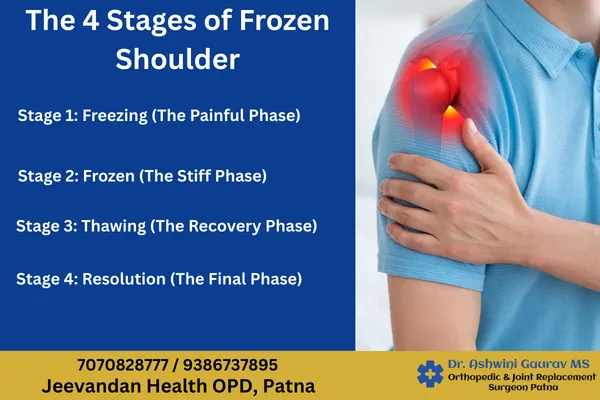
The 4 Stages of Frozen Shoulder
A shoulder frozen condition doesn’t happen overnight. As Dr. Ashwini Gaurav—Patna’s top orthopedic expert—explains, the condition moves through four specific phases. Understanding these frozen shoulder 4 stages helps you manage expectations and recovery.
- Stage 1: Freezing (The Painful Phase) Slowly, any movement causes pain, and your shoulder starts losing its range of motion. This typically lasts 6 to 9 months.
- Stage 2: Frozen (The Stiff Phase) In the frozen shoulder frozen stage, pain may slightly level off, but stiffness peaks. Using your arm for daily tasks becomes very difficult.
- Stage 3: Thawing (The Recovery Phase) The “ice” begins to melt. Your shoulder’s range of motion starts to improve, and stiffness gradually fades over 6 months to 2 years.
- Stage 4: Resolution (The Final Phase) Normal strength and movement are almost fully restored.
Dr. Ashwini Gaurav emphasizes that professional shoulder frozen treatment is essential to prevent permanent stiffness. With the right physiotherapy and expert care at Ortho Patna, you can move through these stages much faster and get back to your pain-free life.
How Cold Weather Affects Shoulder Mobility?
During winter, the muscles and tendons around the shoulder tighten, restricting range of motion. The joint fluid thickens, reducing lubrication. That’s why frozen shoulder exercises and stretches are crucial for maintaining flexibility. Without proper movement, the joint capsule contracts further, worsening the stiff shoulder sensation. Simple shoulder stretching exercises or pendulum stretch can prevent this stiffness from turning into a serious frozen shoulder episode.
Who is More at Risk in Winter?
Some groups are more likely to develop frozen shoulder problems during cold months:
- Diabetic patients
- Post-surgery or post-fracture patients
- Middle-aged women
- People with sedentary lifestyles
- Individuals with thyroid or heart issues
Such people must pay attention to symptoms of cold shoulder and consult an orthopedic expert early for frozen shoulder treatment in Patna before it worsens.
Effective Home remedies for Frozen Shoulder
If you’re wondering how to treat frozen shoulder at home, here are effective home remedies for frozen shoulder recommended by specialists:
- Warm Compress: Improves circulation and eases stiffness.
- Gentle Massage and Shoulder Pain Relief: Try a frozen shoulder massage or shoulder pain massage with warm oil.
- Stretch Regularly: Perform shoulder stretches for frozen shoulder to maintain mobility.
- Maintain Posture: Avoid slouching or keeping your arm still for long.
- Use Frozen Shoulder Massager or Acupressure Points: Some patients find relief through frozen shoulder acupressure points or massage for frozen shoulder.
These remedies for frozen shoulder can ease symptoms, but medical supervision is still essential for complete recovery.
Medical Treatments and Physiotherapy Options:
Professional frozen shoulder treatment in Patna usually includes a mix of medication, physiotherapy, and, in severe cases, minor procedures.
Common approaches include:
- Medication: Anti-inflammatory frozen shoulder medicine reduces swelling and pain.
- Physiotherapy: Targeted physiotherapy exercises for a frozen shoulder improve joint mobility.
- Exercise Therapy: Frozen shoulder exercises at home such as pendulum exercise shoulder, frozen shoulder stretches, and stretching exercises for a frozen shoulder are part of rehab programs.
- Hydrodilatation or Injections: In some cases, fluid injection helps stretch the joint capsule.
Dr. Ashwini Gaurav recommends a customised combination of rehabilitation exercises for frozen shoulder, shoulder stiffness exercises, and gentle frozen shoulder and massage therapy for lasting relief.
Preventive Measures During the Cold Season:
Prevention is always better than cure. Here’s how you can avoid winter shoulder pain and stiffness:
- Perform stretching exercises for frozen shoulder daily.
- Keep your shoulder warm with proper clothing.
- Avoid sitting in one position for long periods.
- Maintain a balanced diet rich in Vitamin D and calcium.
- Stay physically active — regular movement prevents the joint from “freezing.”
Following these habits ensures that your shoulders stay healthy even in winter.
How to Cure Frozen Shoulder Quickly
If you want to recover fast from adhesive capsulitis, you must act early. Dr. Ashwini Gaurav recommends these three essential steps to speed up healing:
- Move Early: Don’t let the shoulder stay still. Gentle, consistent stretching prevents the shoulder frozen condition from getting worse.
- Heat Therapy: Use warm compresses, especially in winter, to relax the muscles and improve blood flow to the joint.
- Expert Care: For the fastest results, Dr. Ashwini Gaurav uses advanced treatments like joint injections or specialized physiotherapy to “unfreeze” the joint quickly.
While adhesive capsulitis can take time, professional care at Ortho Patna ensures you don’t stay in pain longer than necessary.
When to Consult an Orthopedic Specialist in Patna?
If your shoulder pain lasts more than two weeks, or you feel limited movement despite home care, it’s time to see a professional. Persistent shoulder frozen issues may need medical imaging and expert evaluation.
Early intervention can prevent the condition from reaching advanced stages. For residents of Bihar, Dr. Ashwini Gaurav, a renowned orthopedic specialist in Patna, provides advanced treatment for adhesive capsulitis using minimally invasive and physiotherapy-based approaches.
Why Choose Dr. Ashwini Gaurav for Cold Shoulder Treatment
With a proven track record in orthopaedic and joint replacement care, Dr. Ashwini Gaurav is widely recognised for delivering effective and patient-centric frozen shoulder treatment in Patna. At his clinic, Ortho Patna, patients receive advanced care supported by modern diagnostics, personalised physiotherapy, and structured rehabilitation plans.
Known for his precision, dedication, and compassionate approach, Dr. Gaurav combines medical expertise with individualised guidance to ensure faster recovery and long-term relief. His commitment to excellence and focus on restoring mobility make him one of the most trusted orthopedic specialists in Bihar.
Conclusion:
The frozen shoulder is more than just a seasonal ache; it’s a serious condition that can restrict your daily activities if ignored. As temperatures drop, awareness of what causes a frozen shoulder, its symptoms, and effective home remedies for frozen shoulder becomes essential. Don’t let the cold take control of your mobility — keep your joints warm, stay active, and consult an expert when needed.
If you’re struggling with winter shoulder pain or want professional advice on how to cure frozen shoulder fast, contact Dr. Ashwini Gaurav and visit Ortho Patna Clinic, the trusted Orthopedic Specialist in Patna, for comprehensive care, advanced physiotherapy, and lasting relief.
FAQs: About Shoulder Frozen
Adhesive capsulitis is the medical name for a frozen shoulder. It is a condition where the flexible tissue (capsule) surrounding your shoulder joint becomes thick, stiff, and inflamed. This makes it very painful and difficult to move your arm freely.
The exact reasons for frozen shoulder can vary, but it usually happens when the shoulder joint is not used for a long time due to an injury, surgery, or a fracture. It is also very common in people with Diabetes or thyroid issues. In winter, the cold weather can make the stiffness even worse.
To treat frozen shoulder effectively, Dr. Ashwini Gaurav recommends a combination of:
- Physiotherapy: Regular stretching exercises to regain mobility.
- Heat Therapy: Using a heating pad to relax the stiff muscles.
- Medical Procedures: In severe cases, treatments like hydrodilatation or joint injections help “unfreeze” the joint.
There is no single “magic pill,” but the best medicine for frozen shoulder usually includes anti-inflammatory drugs (NSAIDs) to reduce swelling and pain. Dr. Ashwini Gaurav advises that medicine works best when combined with daily physiotherapy. Note: Always consult a doctor before taking any medication.
To get quick relief from pain in the shoulder blade, try these tips:
- Gentle Stretches: Move your shoulder blades back and forth (scapular squeezes).
- Warm Compress: Apply a warm bag to the area for 15 minutes to improve blood flow.
- Posture Correction: Avoid slouching while sitting at a desk or using a phone.
- Expert Consultation: If the pain persists, visit Dr. Ashwini Gaurav at Ortho Patna for a proper check-up.
Yes, definitely. Cold weather has a direct impact on joint health. Dr. Ashwini Gaurav often sees a rise in patients complaining about increased stiffness during the winter months in Patna.
Here is why cold weather affects a frozen shoulder:
- Muscle Tightness: Cold temperatures cause your muscles and tendons to contract or “tighten up.” This makes an already stiff shoulder feel even more locked.
- Thicker Joint Fluid: The fluid inside your joints (synovial fluid) acts like oil in a car. In cold weather, it can become thicker, making the “sliding” motion of the joint much harder.
- Reduced Blood Flow: When it’s cold, the body sends more blood to the core to stay warm, reducing circulation to the joints. This can increase inflammation and pain in cases of adhesive capsulitis.
- Sensitivity to Pressure: Changes in barometric pressure (which happen when the weather turns cold) can cause the tissues in the shoulder to expand and contract, triggering pain.
If your winter shoulder pain is becoming unbearable, it’s best to consult Dr. Ashwini Gaurav at Ortho Patna for a professional evaluation.
Yes, cold weather significantly impacts frozen shoulder (Adhesive Capsulitis). Many patients notice that their shoulder pain and stiffness worsen as the temperature drops. Here is why:
- Muscle Tightness: Cold temperatures cause muscles and tendons to contract and tighten. If you already have a stiff shoulder, this contraction makes movement even more painful.
- Thicker Joint Fluid: Think of the fluid in your joints (synovial fluid) like engine oil. In winter, this fluid can become thicker and less “slippery,” making it harder for the joint to move smoothly.
- Reduced Blood Flow: To keep your core warm in winter, the body reduces blood circulation to the extremities (like your shoulders). Less blood flow means more inflammation and slower healing.
- Barometric Pressure Changes: When the weather turns cold, air pressure changes. This can cause the sensitive tissues in your shoulder joint to expand slightly, triggering a “flare-up” of pain.
Pro Tip: Keep your shoulder warm with layers or a heating pad to maintain blood flow and reduce winter stiffness.
While frozen shoulder is most common in people aged 40–60, men in their 30s can also suffer from shoulder pain during winter due to several specific factors:
- Sudden Inactivity: In winter, we tend to stay indoors and move less. For a 30-year-old man who is usually active, this sudden “sedentary lifestyle” can lead to joint stiffness and muscle imbalances.
- Old Injuries Flaring Up: If you had a sports injury, gym strain, or a minor tear in your 20s, the cold weather can aggravate the old scar tissue, making the joint feel achy and “frozen.”
- Poor Sleeping Posture: During cold nights, we tend to curl up tightly to stay warm. This “fetal position” can compress the shoulder joint for hours, leading to sharp pain when you wake up.
- Gym Strains: Lifting heavy weights in a cold gym without a proper 15-minute warm-up is a leading cause of shoulder Tendonitis or Bursitis in younger men during winter.
How to fix it: If you are 30 and feeling the chill in your joints, focus on dynamic warm-ups before exercise and ensure you are getting enough Vitamin D, which often drops during the winter months.
